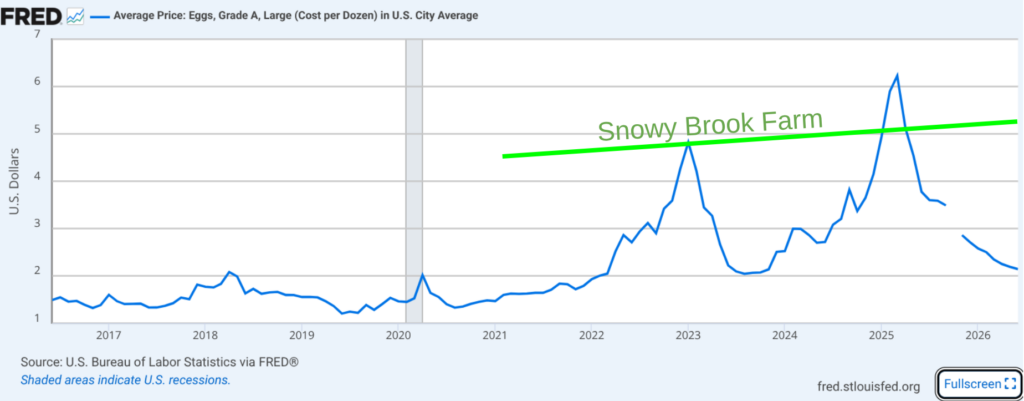



When people visit the farm and see our 1000 chicken (and Goose) operation, they oftentimes come to the conclusion that chicken farming is our full-time operation. However, it turns out that selling eggs for $0.25 profit per dozen is only enough revenue to cover the costs of hosting a blog. As such, in addition to our farmwork, both Amy and Zach have 40 hour a week hobbies that they leverage to buy more food for chickens. Interested to hear more? Of course you’re not! Let’s get to it, shall we? Note that Amy’s section has been mildly edited due to potential conflicts of interest between her work and hobby.
Amy works for [redacted] as a [conflict of interest]. She spends much of the work day helping small scale [nouns] plan out and achieve their [objectives]. Due to the nature of her work, she’s often out-and-about, visiting [landmasses] and [the owners of those landmasses]. Lately, the outbreak of [a deadly virus] has made her very popular, and she’s made several appearances on [various media outlets] to discuss the implications of [a deadly virus] on the price of [baking ingredients with high cholesterol]. Everybody loves Amy and the work she does to make Western NY a better place for [people who wear brimmed hats] <3
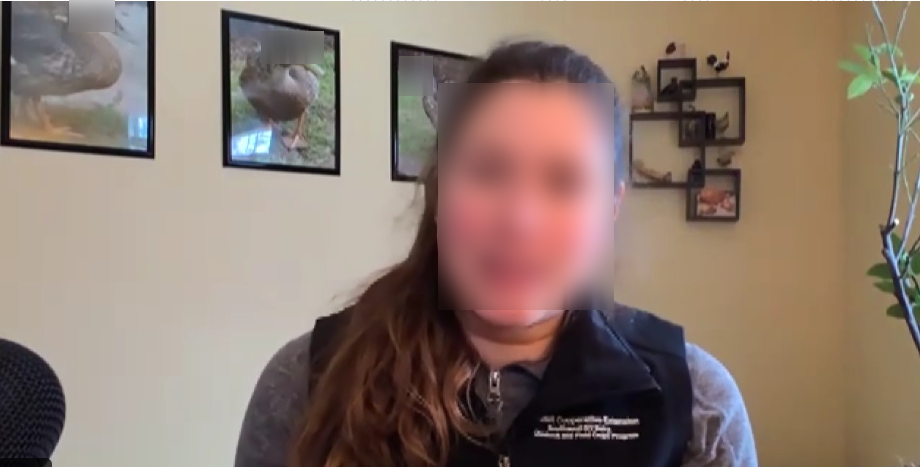
A mysterious person giving a mysterious interview about mysterious animals
Zach is a climate scientist. Yup. One of those guys. In a country where half of the inhabitants think climate change is fictitious, the otherwise banal question “and what do you do for a living” can be a tricky topic to navigate. Fortunately, this isn’t small talk with neighbors; it’s a blog post on a website about chickens, so buckle up and get ready to learn all about the daily adventures of a guy that studies methane!
Yes, methane. I spend all day studying this thing.
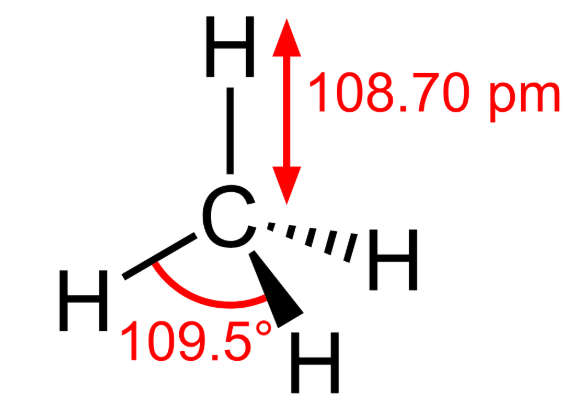
Check out those sweet curves
As far as gases go, methane is pretty great. We heat our homes with it. It produces lots of economic revenue. It can even be used to make flatulence jokes. Unfortunately, like all things that are good and holy in this world, this also means it’s a greenhouse gas. And indeed, a tripling of methane since the Industrial Revolution has contributed to about 0.5F of warming so far. The good news is that concentrations of methane leveled out in the mid-2000s. We did it! We did nothing and methane was defeated!!!…until it wasn’t. By 2008, it started increasing again, and now it’s increasing faster than it ever has in our lifetimes.
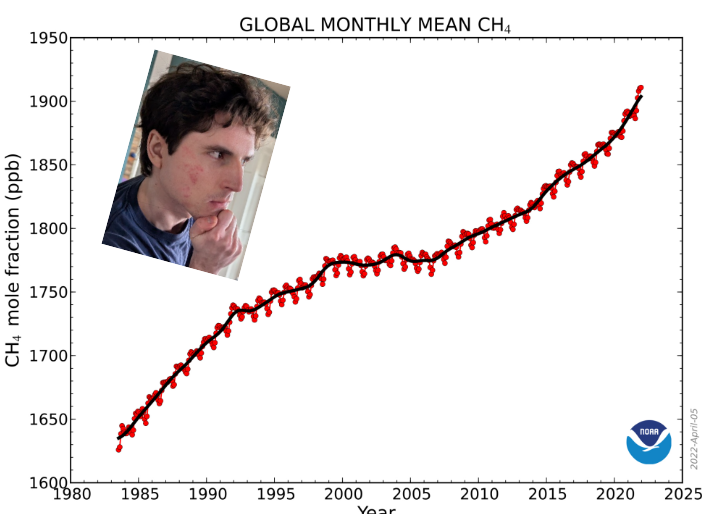
Zach doing very advanced analytics on a plot
I am the Grand Secretariat of Methane. It is my job to observe methane, talk to methane, audit methane, become methane (I’m good at that one, Amy will testify to that). We as a community must figure out what the heck is going on with methane, because, and I’m being completely frank here, we have absolutely no idea why it’s increasing rapidly and that’s a very bad thing for long term prospects.
So how does one talk with methane? As an atmospheric scientist, our group does this using atmospheric observations. Imagine you have a big gas basin, and you want to know how much methane is escaping out of the infrastructure. Instead of measuring every one of the 100,000 or so gas wells point by point, we instead stick a methane measuring instrument on large cellphone towers both upwind and downwind of the gas basin and continuously measure over the course of days/months/years. The difference between the two values measured tells us something about the total methane that must have been emitted by everything in-between the towers.
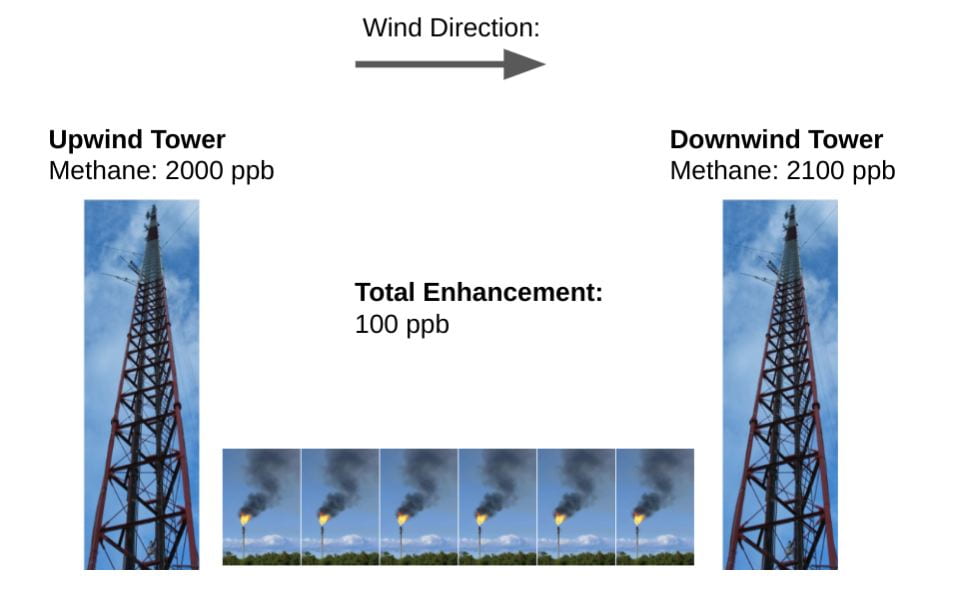
An incredibly sophisticated diagram of how we measure methane
These towers give us an observed methane enhancement. On it’s own, it’s a cool data point, but what we really need is to compare these observed values to what we should be seeing based on what we’re told the methane emissions should be. We need to model the expected methane! This is done through a series of steps involving lots of physics and math far too detailed for a farming blog post being written on a Saturday.
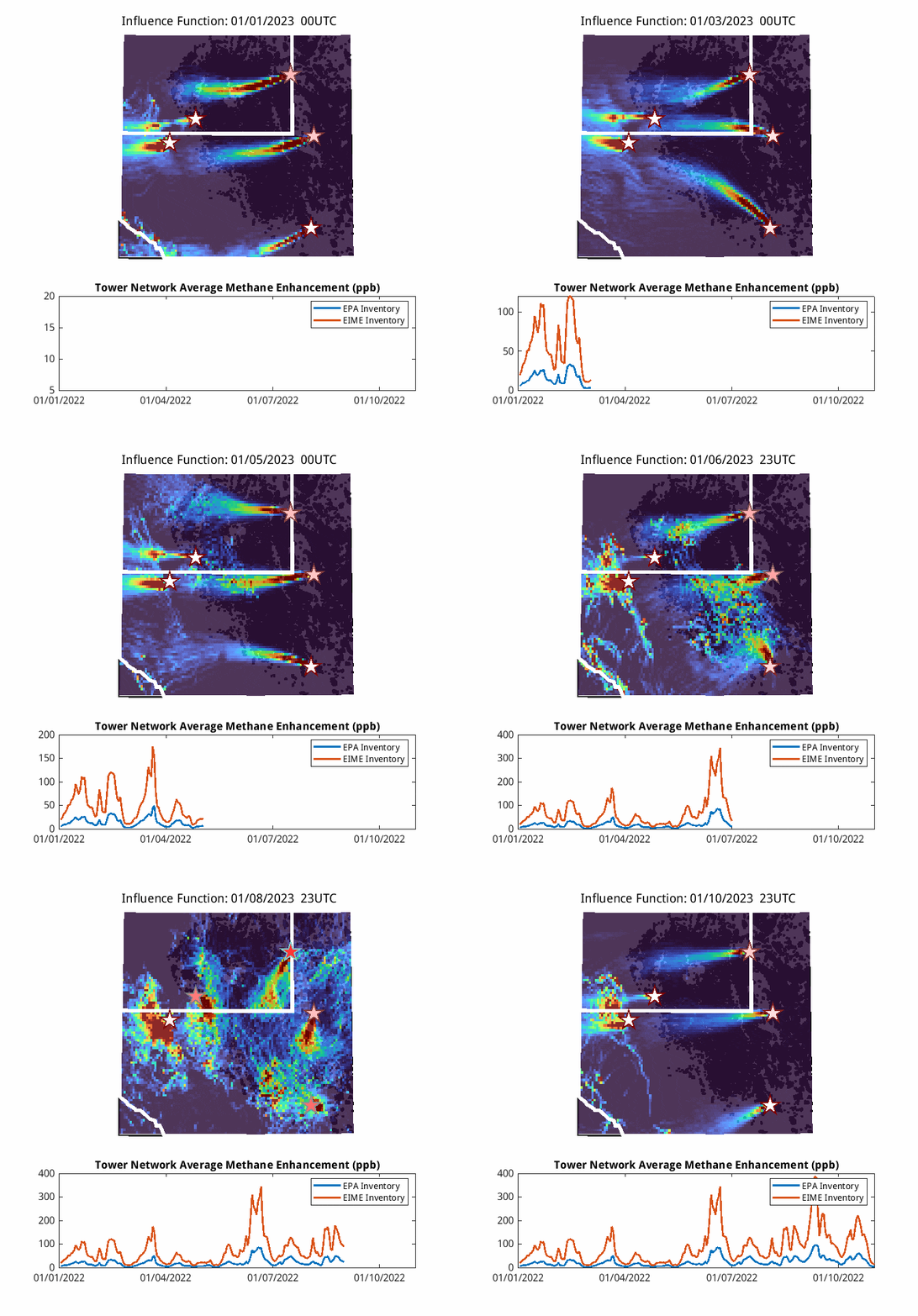
This gif is meant to convey the complexities in calculating the expected methane enhancement. Look at all the pretty moving colors!
Here’s what’s important: If the observed values are lower/higher than our modeled estimates, then we know the emissions must be lower/higher than the expected methane emissions being used in the model (it’s always higher). From there, we can work with industry, policymakers, and other groups to help identify where the missing methane emissions are coming from and what actions can be done to reduce them. By preventing methane escaping infrastructure from gas basins, we can increase the amount of fuel that makes it to powerplants and homes while also decreasing the amount of methane entering the atmosphere. It’s a win win!
So that’s my hobby. Methane Scientist! It’s not where I pegged myself being when I was 5 year old, but I do enjoy it. Others may disagree, but personally, there’s nothing better than being able to immerse oneself in a warm blanket of data, encountering new questions each day, and trying to figure out how to code your way out of it. Unfortunately, the public has spoken, and funding that was already pledged for research and climate policy has instead been redirected to more important things like eliminating the estate tax for people inheriting more than $10,000,000. Friends and colleagues of mine have already lost their jobs, and it’s looking more and more likely that my hobby as a Methane Scientist will be coming to a close before year’s end. So let us end this sad tale with a toast. Here’s to you methane, you brilliant, odorless gas! You may no longer be observed, but you will never be forgotten~
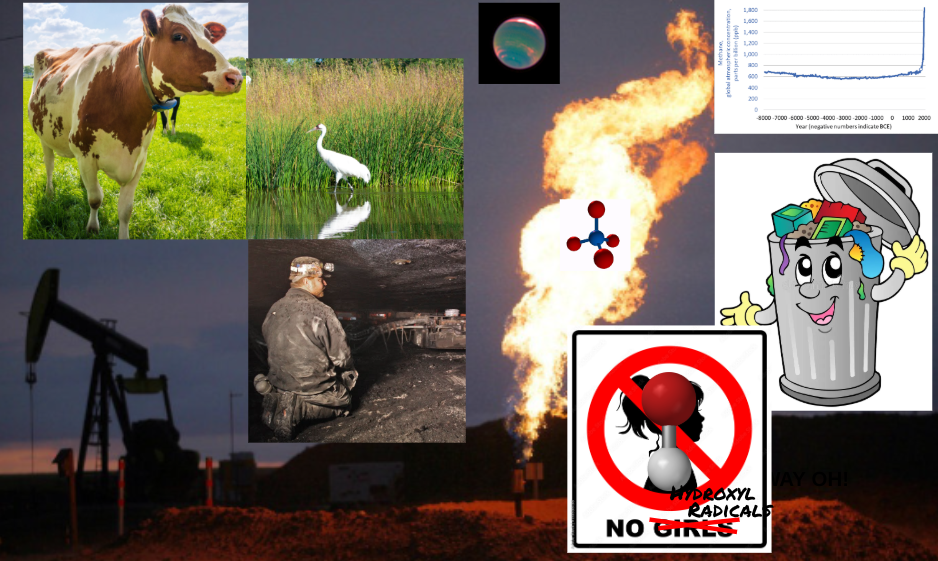
An ode to methane, the most glorious of all gases.
We survived another year! Here’s our obligatory Christmas card rehashing all our 2024 adventures. Click on the 3 black dots to make the card Fullscreen. Use the arrows to scroll between slides. Be aware there is background music, though you may have to click the (!) at the bottom of the slides to give it permission to play.

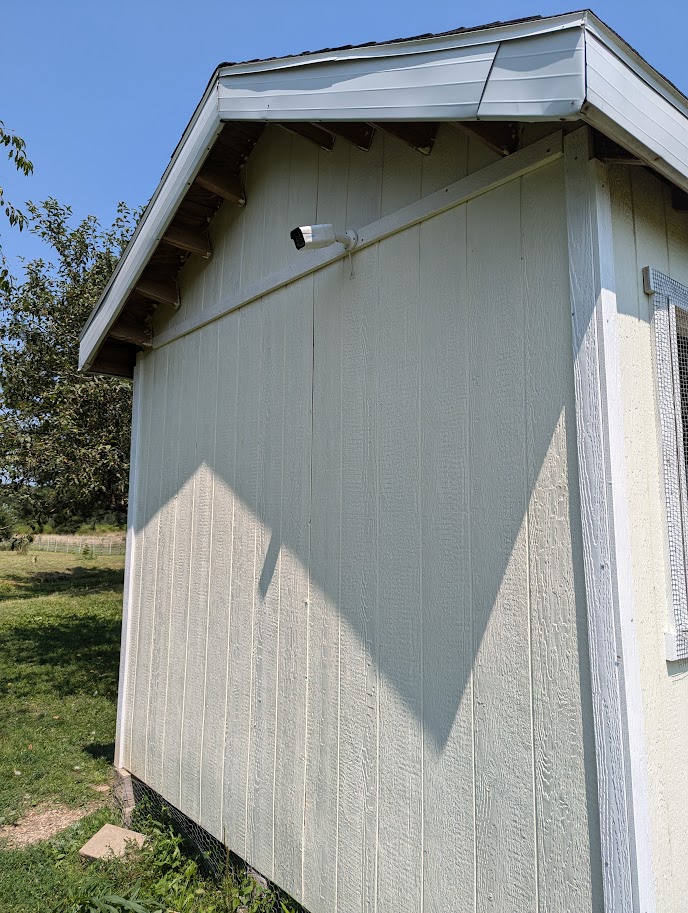
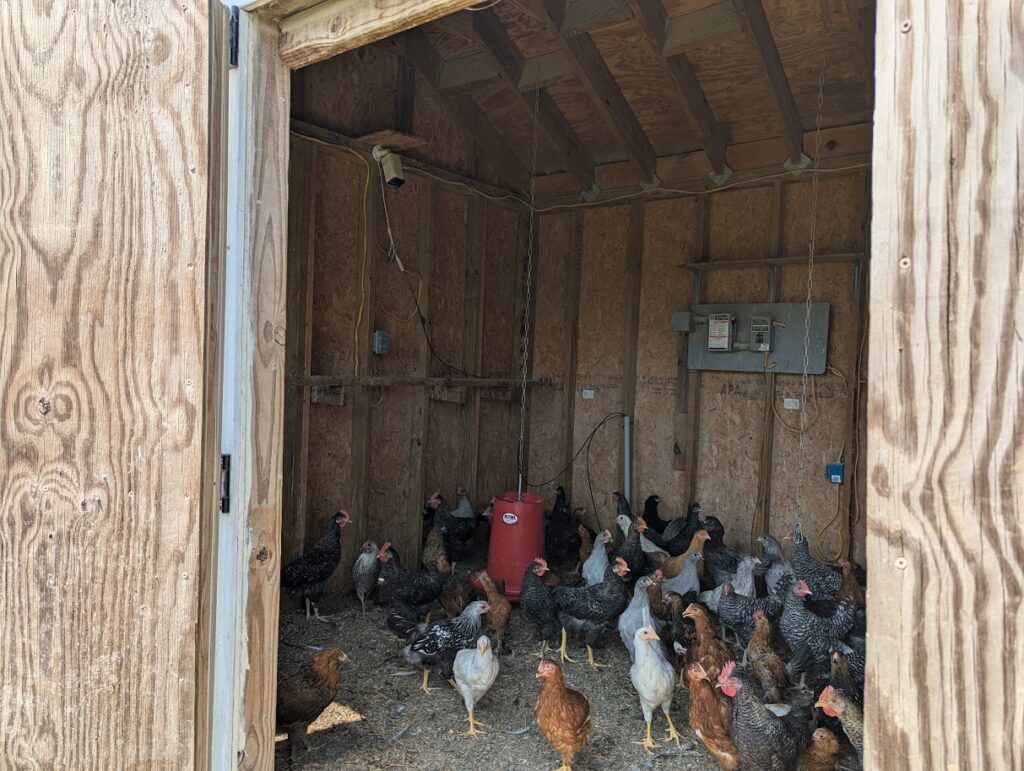
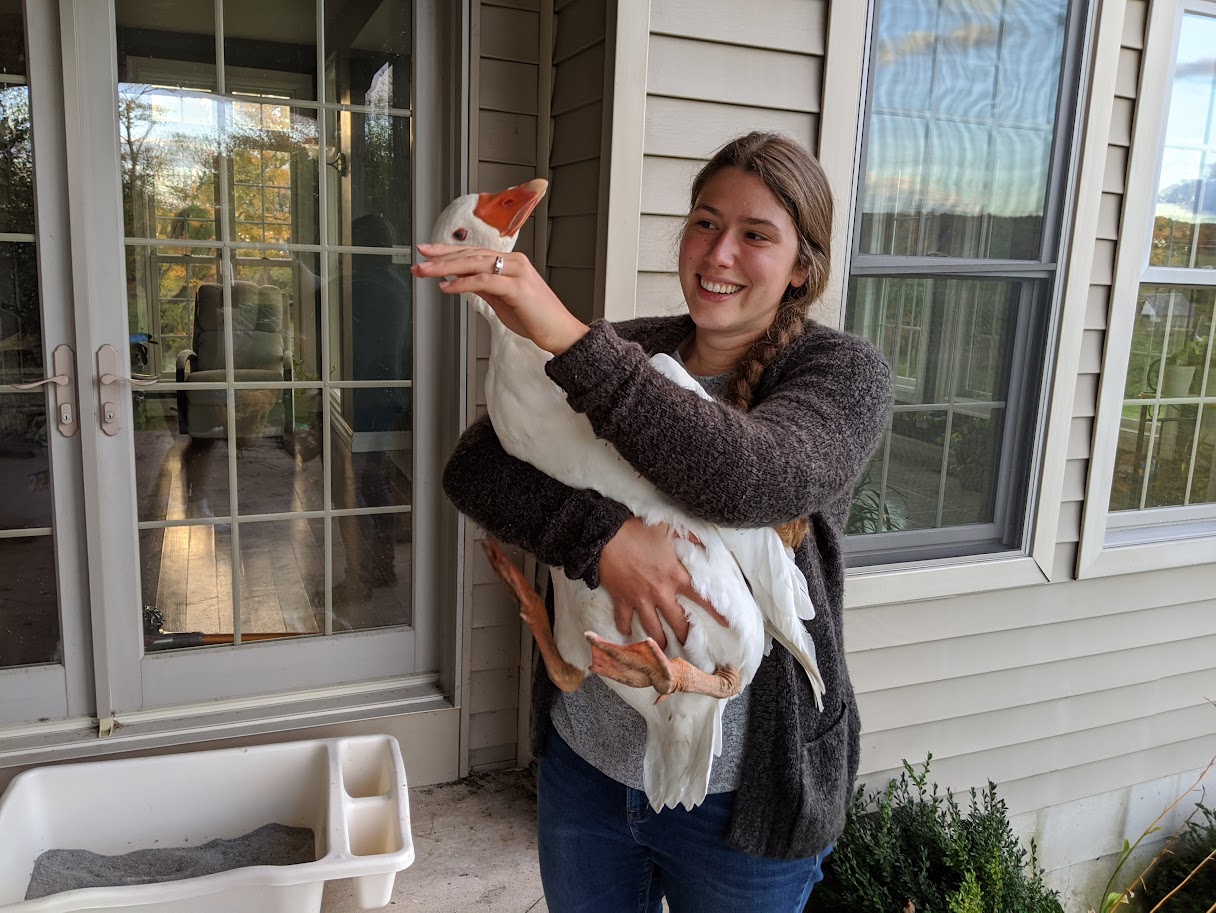
These post segments are part of a series called “Life in the Coop”, and yet, up to this point there are ZERO coop pictures. Let’s alleviate this distressing realization now and share some photos. The media upload page says 16 photos to be exact, so buckle up. Fortunately, I’ve figured out the slideshow function, so no more 52 page posts.
Amish Shed
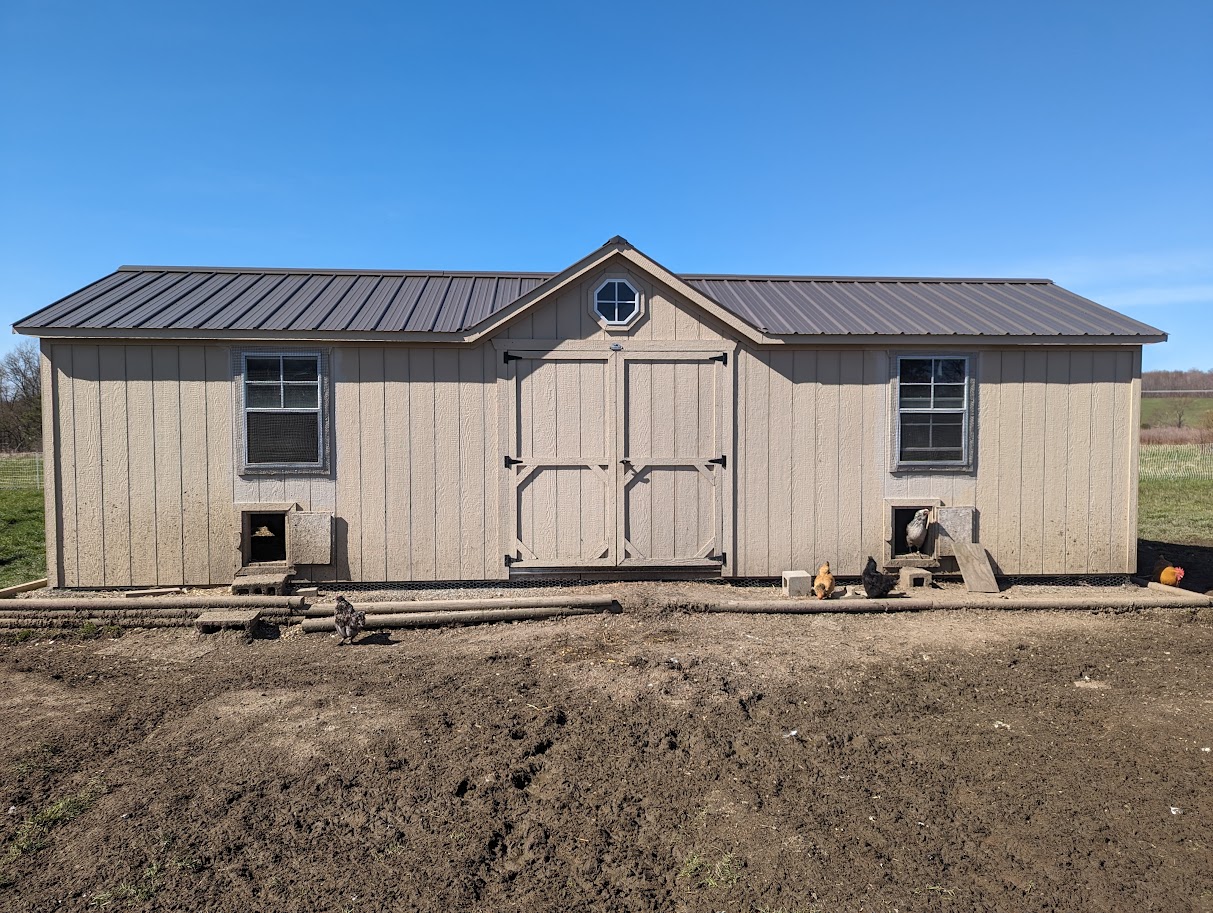
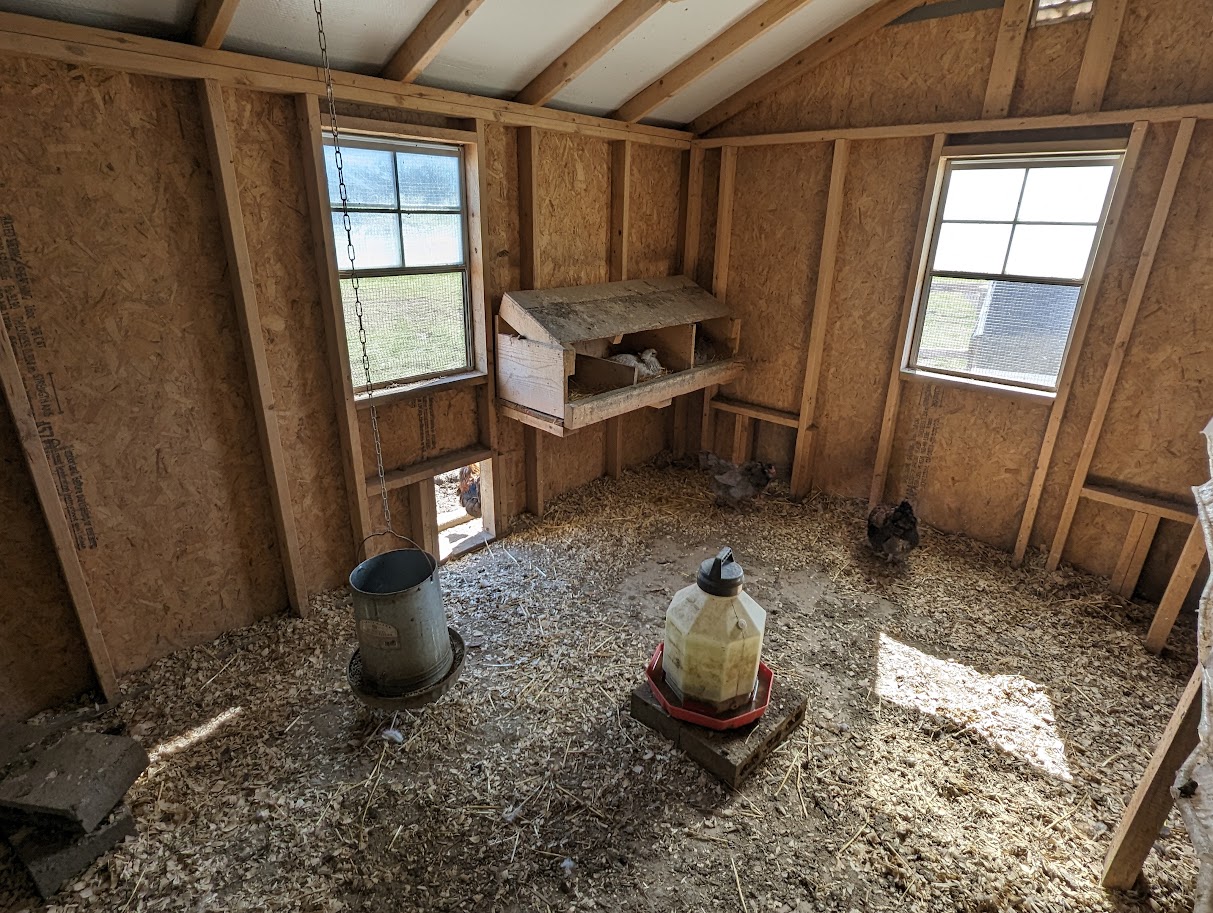
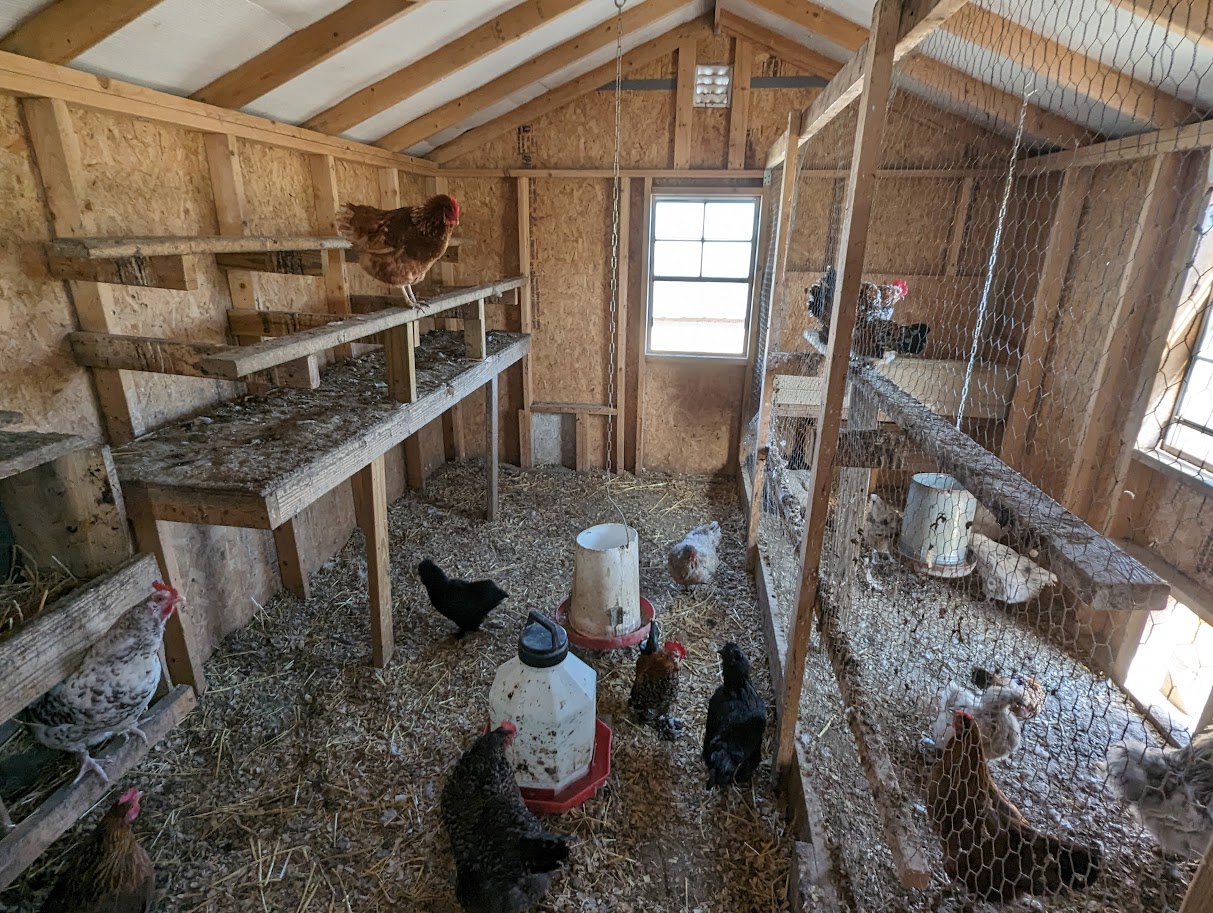
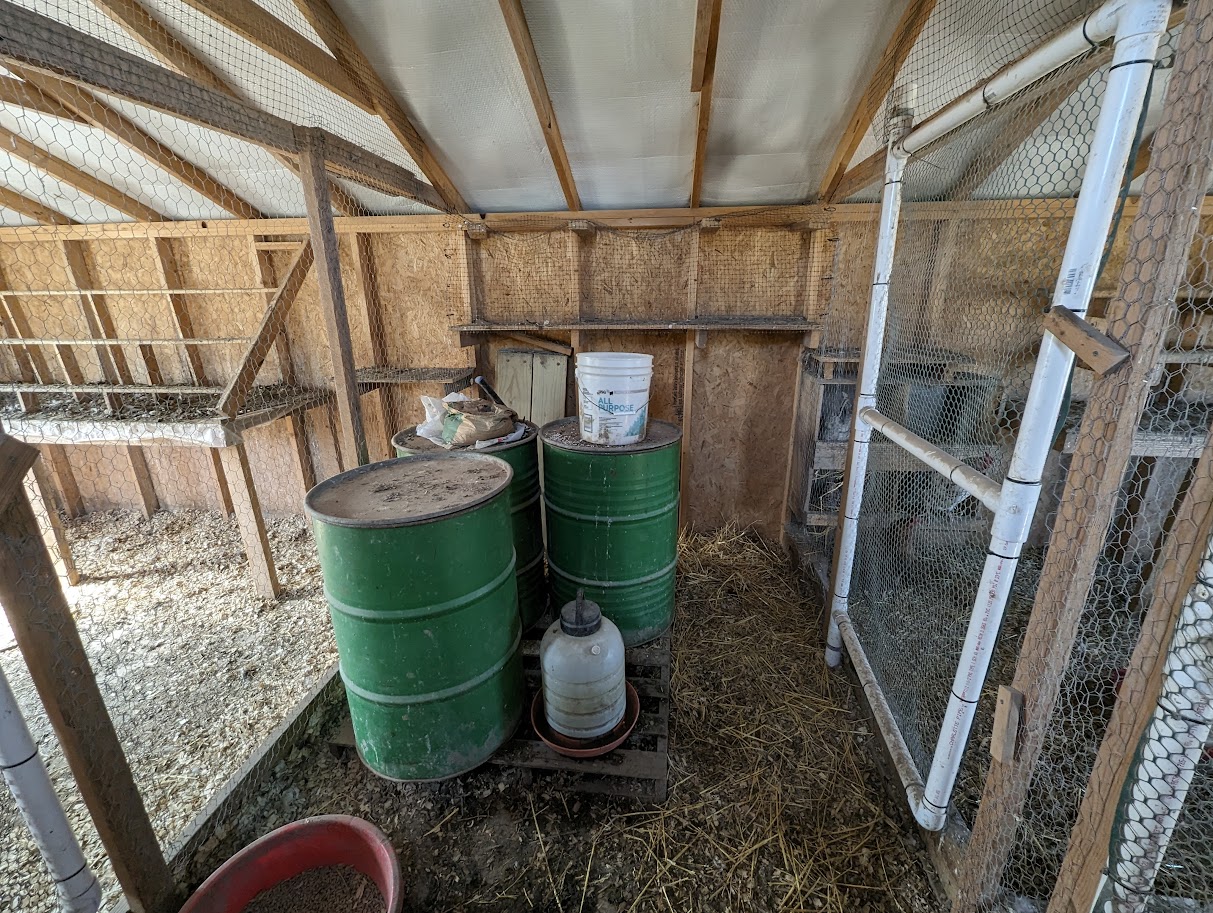
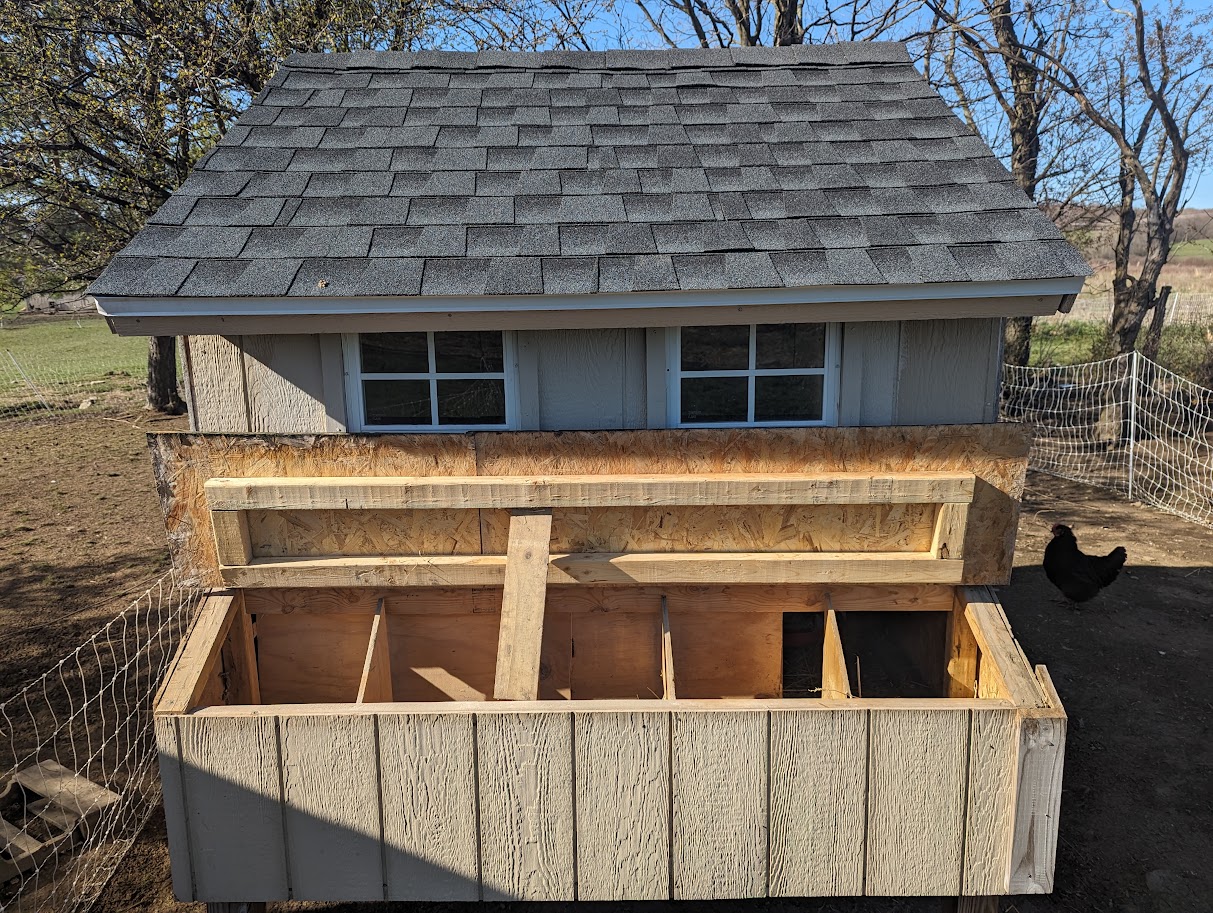
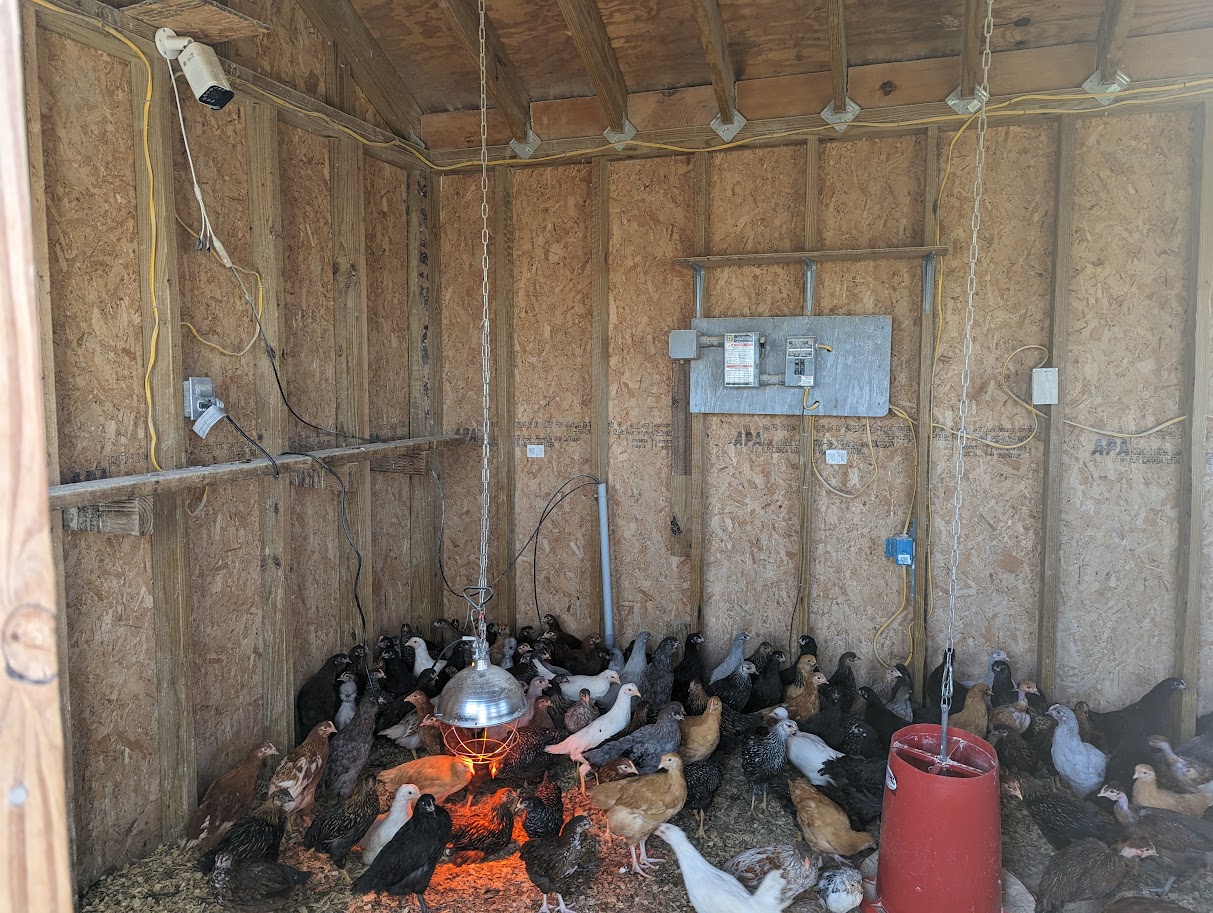
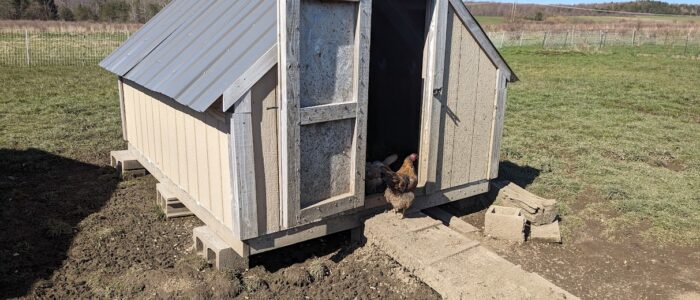
The Beverly Hills of the Snowy Brook Estate, Amish Shed is where the elite come to roost, home to the Named Chickens and any of our long-term favorites. This shed is one of our few imported works, built by Amish Valley Sheds. However, Amy made some additional modifications to it to add her own personal flair, and sectioned it off into 4 districts. Much to Amy’s dismay, Zach does not believe in chicken class segregation and added his own modifications: a series of secret holes and bridges to connect the different pens. By some miracle their little chicken brains figured out how to navigate the labyrinth and now all the chickens are free to sex each other up, just as nature intended.
Silky Shack Boulevard
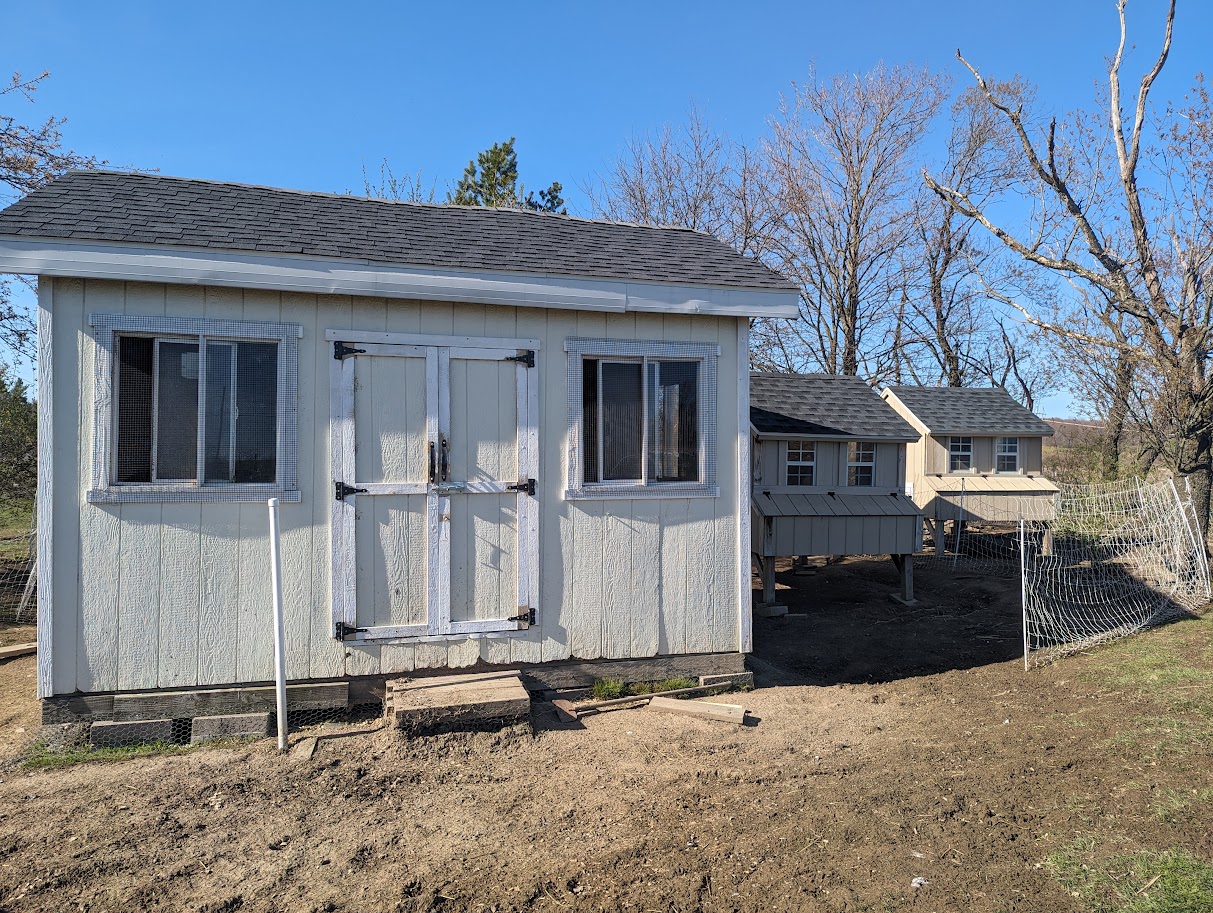
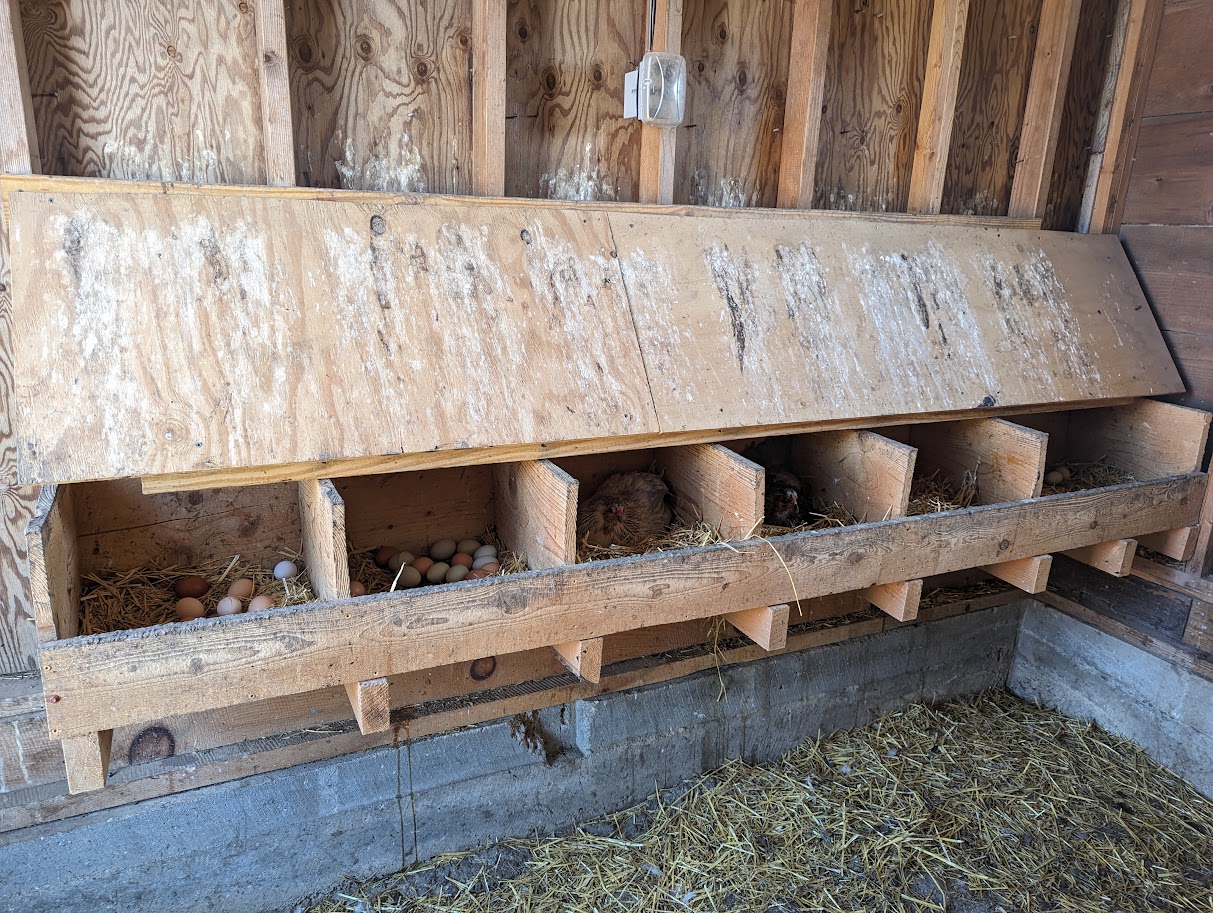
Silky Shack Boulevard is a suburian offshoot of Snowy Brook Estates, nestled just across the driveway creek. All three structures were built onsite by the boss and come with a variety of basic amenities for the 21st century chicken, including nest boxes with easy human access, electricity for charging their smartphones, and even 24 hour surveillance with livestreaming capabilities. Originally intended for the tiniest of our chicken flock, wayward chickens from Amish shed keep finding their way to these coops, and now a mix of chickens in all shapes and sizes can be found roosting in Silky Shack Boulevard
Red Shed
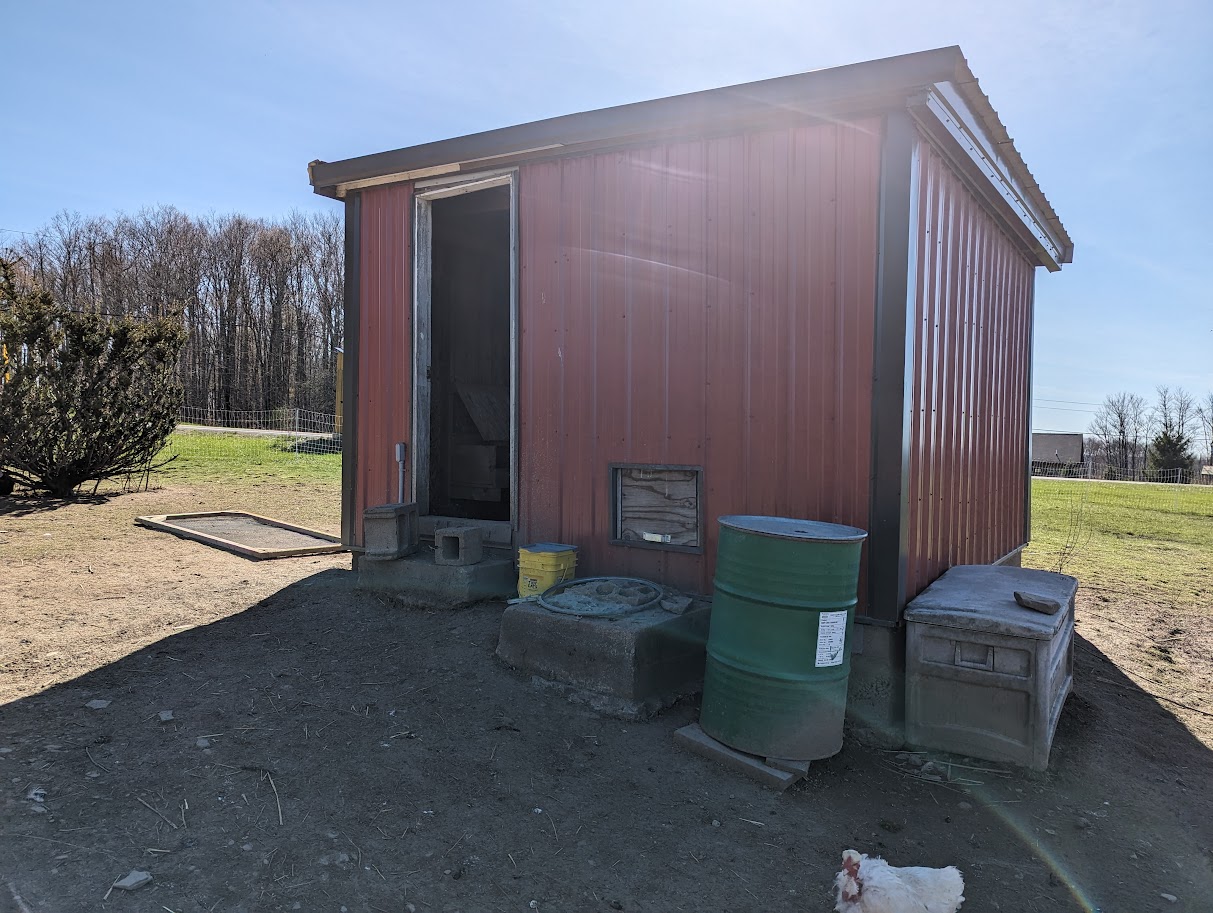
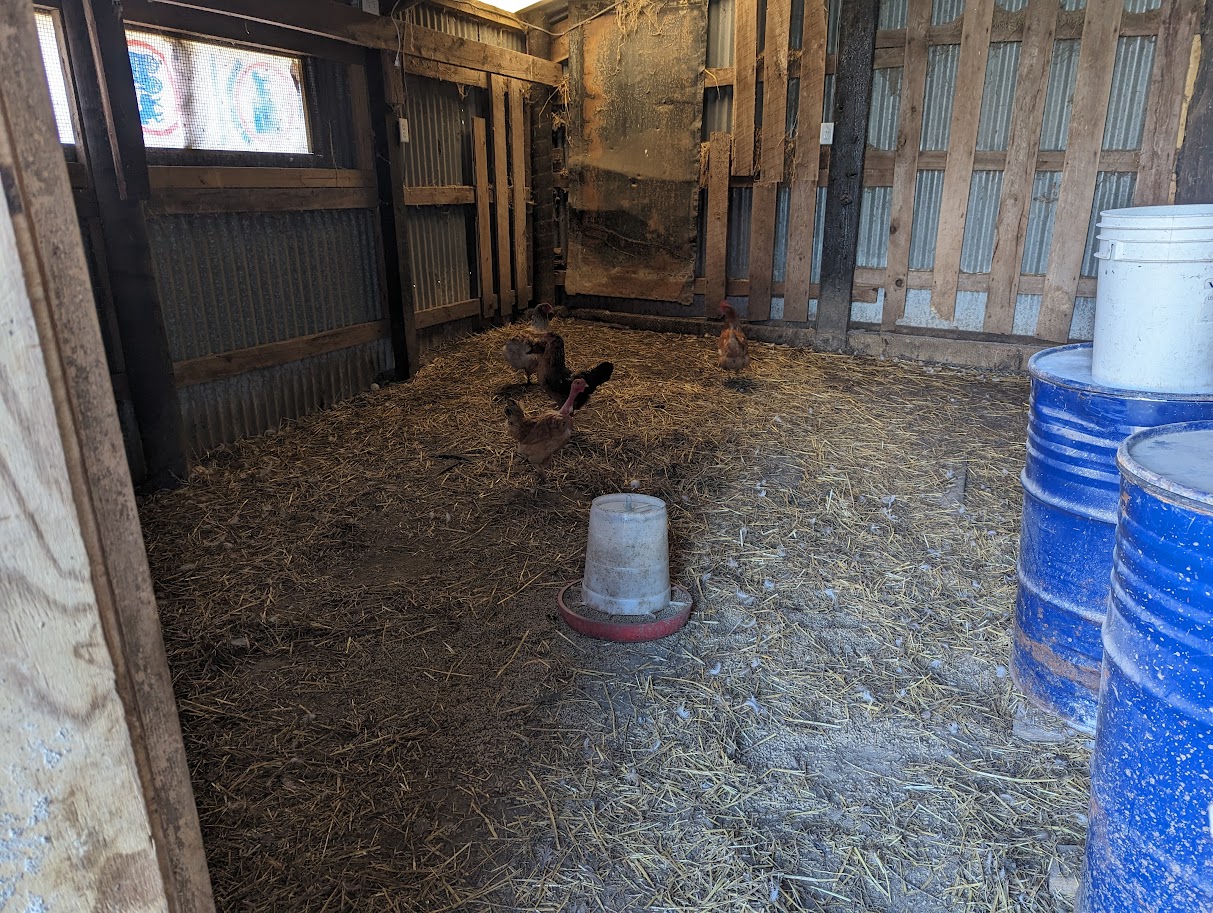
Across the main brook from which Snowy Brook gets its name lies the reddest of all the sheds. Originally a dilapidated structure built in the 70s to protect the secrets of nitrogen technology, the shed was revamped and repurposed to host our main layer groups. As such, Red Shed is equipped with state-of-the-art nest boxes and a timed light to let the birds know when the sun should be out, even when it’s not. The chickens of Red Shed have a profound sense of mischief, and do all they can to route a path beyond the white fence and into the neighbor’s yard.
The Aviary
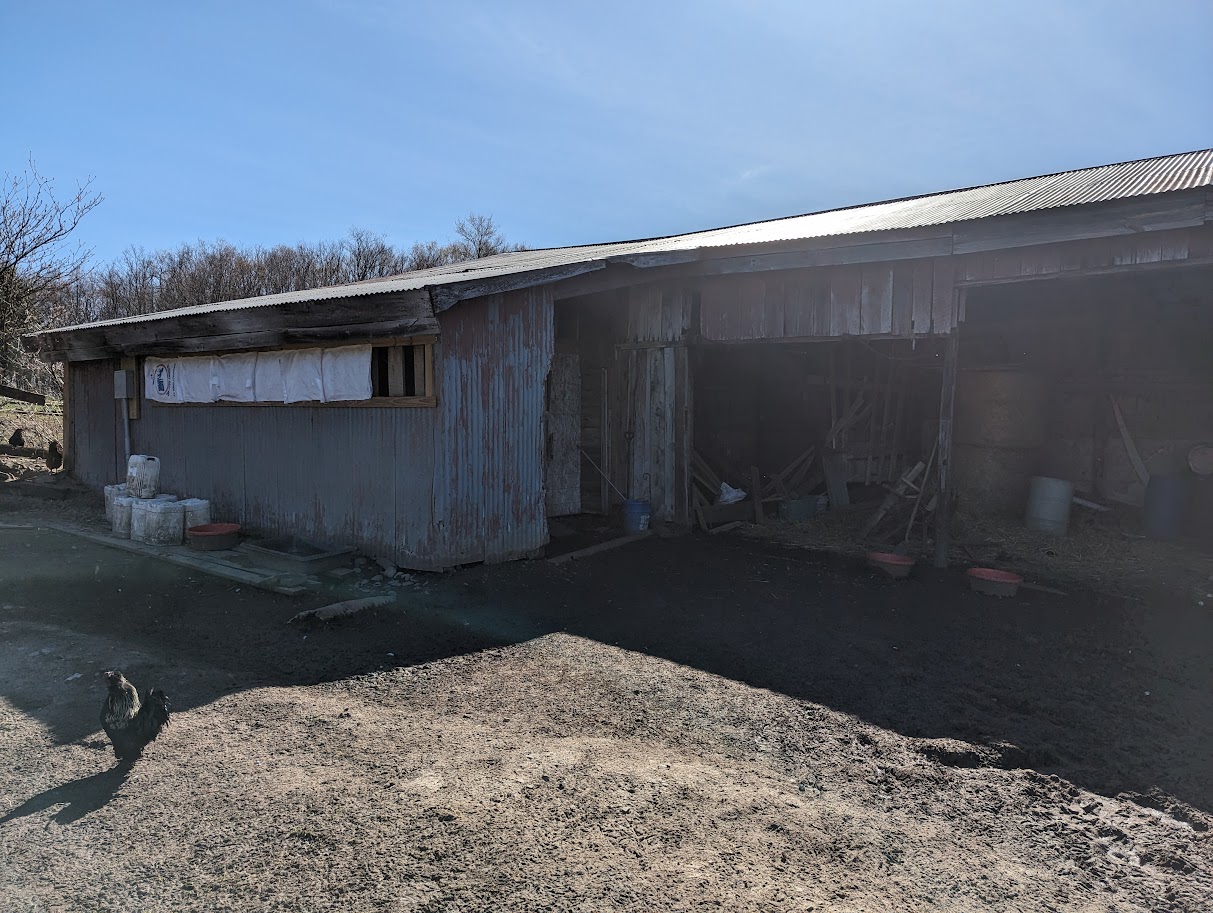
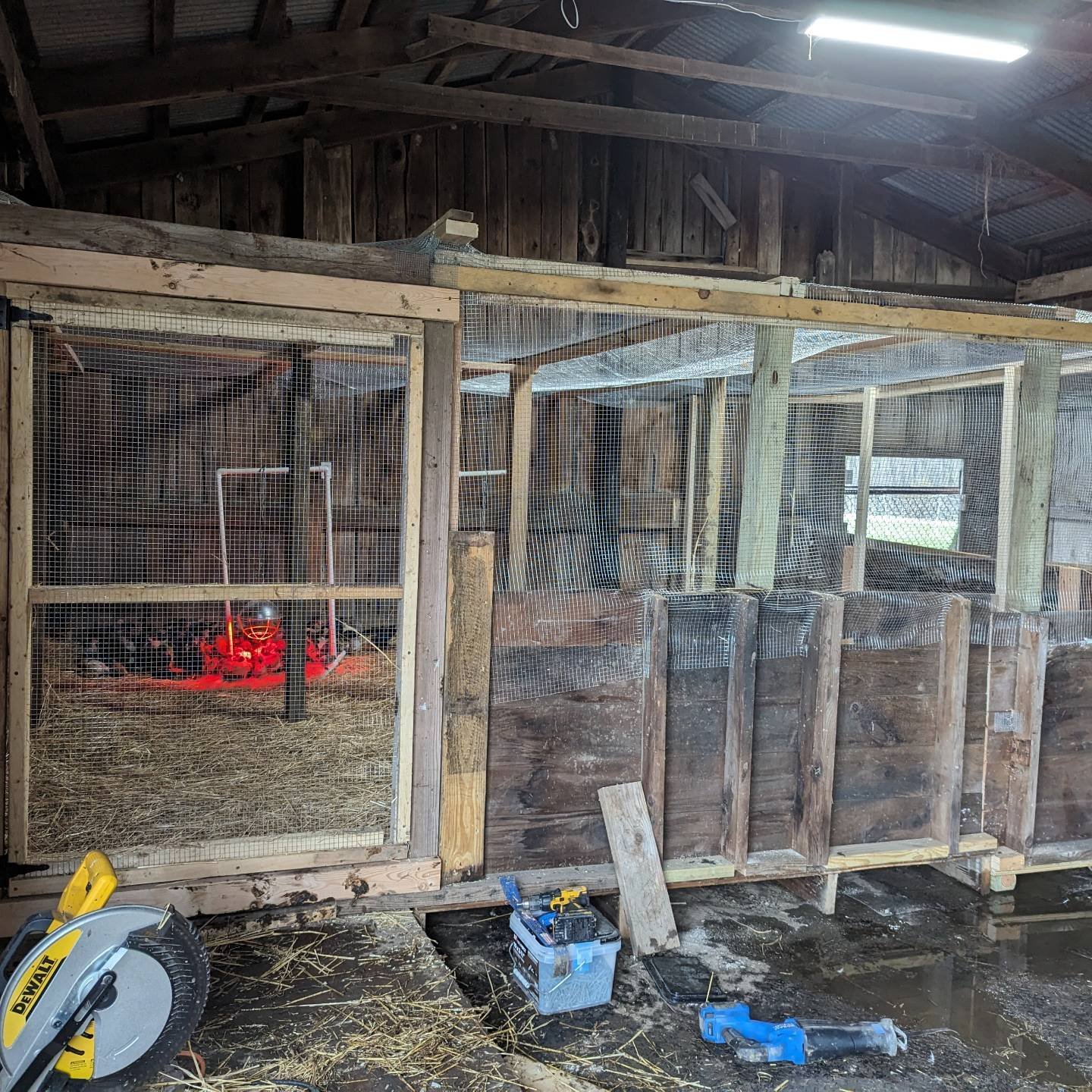
This once-struggling barn lies just to the north of Red Shed and has just finished being renovated into a duck and chick paradise. The Aviary is one of our most spacious condos, with the left side home to our laying ducks and the right side hosting younger chicks. Though renovations are mostly complete, the duck housing in particular is lacking in personality. In due time, Zach plans to use money generated by the local community through the farm stand to improve the lives of these resident ducks, decorating the interior with portraits of famous ducks past to inspire its tenants.
The Projects
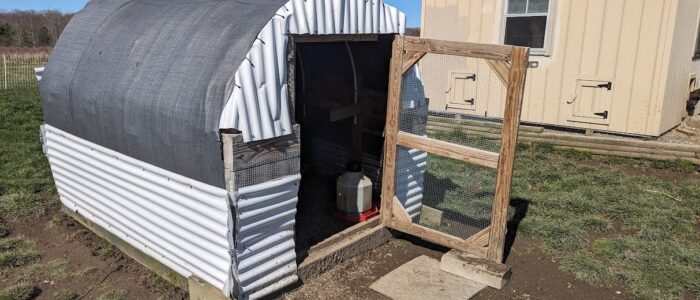
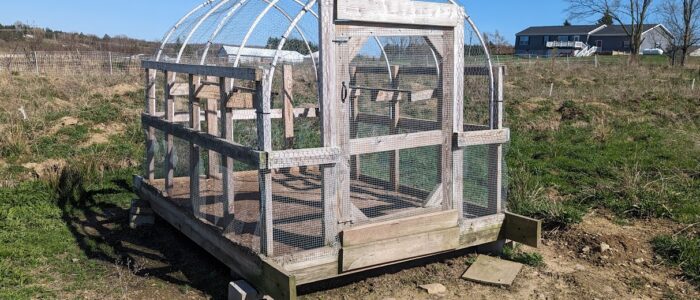
These miscellaneous structures lie scattered around the Estate and have served various purposes throughout time. Most of these projects have since been abandoned as larger, more coherent structures have emerged to take their place, but they’re still useful in times of emergencies. Despite their limited utility, you can still count on one or two of these unique structures to randomly generate itself somewhere in our yard each year.
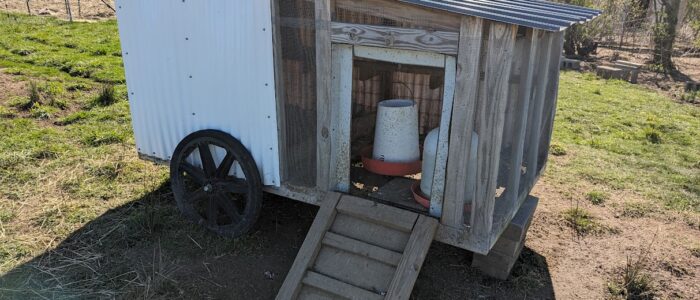
You’ll notice some of them have wheels. The idea was simple: “What if coops could roll?” That was definitely one of the weirder phases the boss went through.
The Garage
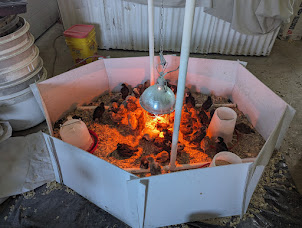
The garage is not a coop. Do not encourage this behavior!
As you may have heard, Snowy Brook Farm has a lot of chickens. 7 gazillion to be exact. While we do not have the emotional capacity to develop a personal connection with every single chicken, it is true that at least some of our chickens have names. In fact, I’ve added a tab to the main page with photos of all of our named chickens! But how does a chicken become a “named” chicken? And how is that name decided on? Let’s explore the taxonomy of Snowy Brook chickens
At the dawn of the Snowy era in the year 0 BSB, all chickens were nameless. However, one day my brother and his wife sent us Home Depot gift card sleeves, in the form of miniature aprons.
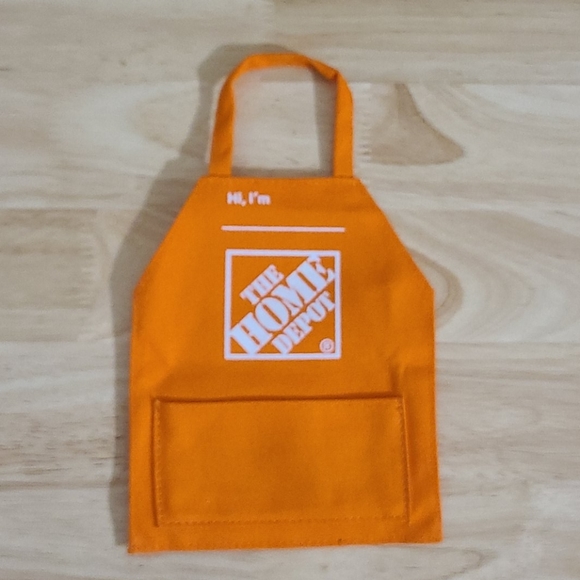
These tiny aprons are supposed to be a cute gag referencing the outfits worn by the employees at Home Depot, but as it so happens, they also fit well on chickens. However, at the top, it says “Hi, I’m _______”. In order to wear the apron, you must have a name. It is the Law of the Apron. As such, to put these aprons on our chickens we started naming them. And thus, Clyde was born 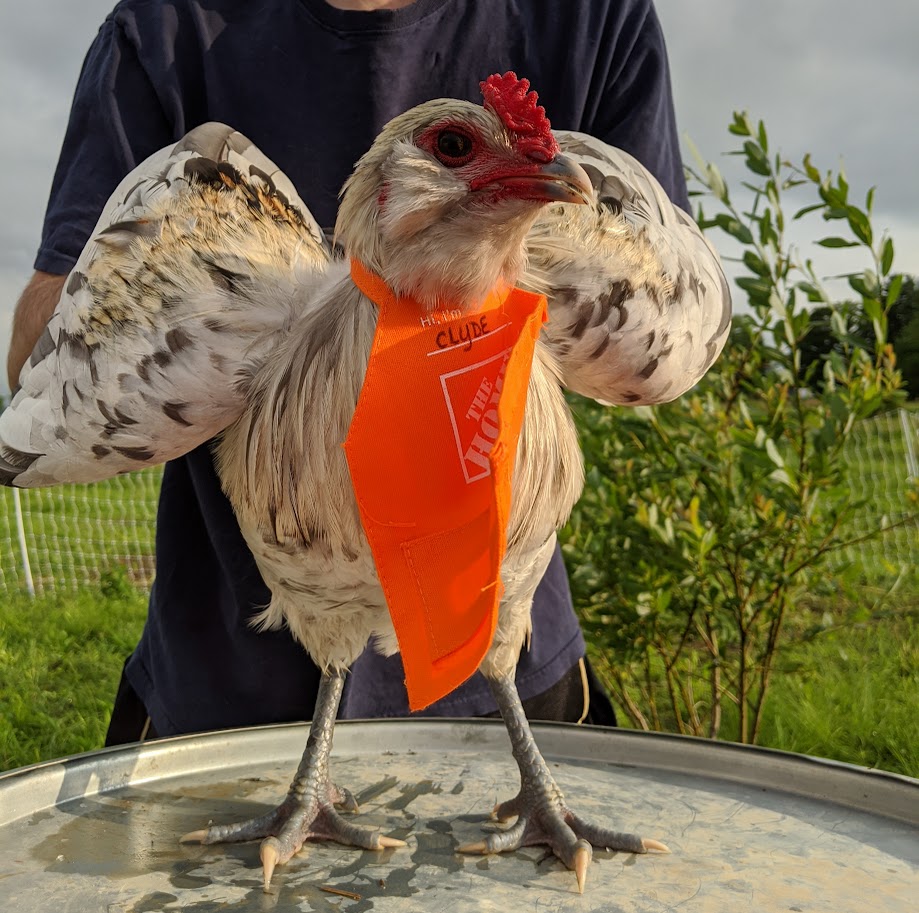
Why Clyde? I don’t know. The boss named him, and whenever I ask the boss why he’s named Clyde, she just gives a ¯\_(ツ)_/¯ and we carry on with our day. Understandably, I have mostly taken on chicken naming duties since, though Amy still participates when appropriate.
To earn a name, there must be something that sets a chicken apart from the flock. Once that happens, the name just naturally develops. For example, a chicken that poops a lot might just naturally start being called “Sir Poops a Lot”. And if it sticks, it becomes their name for life, and that chicken officially becomes a Named Chicken. Being a Named Chicken is a very prestigious status, often resulting in extra corn (they like this), and extra human attention (they do not like this). Additionally, a Named Chicken gains a form of immortality, for when they inevitably pass on to the great Yolk in the sky, a new chicken will one day come along with their same traits and personality, and they inherit the name and are treated as one-in-the-same with the original.
Deep stuff, huh… A chicken name is a name that will be carried on the farm for life. Thus, it is of the upmost important that our names carry with them a level of thoughtfulness that is reflective of this farm’s high standards. And so to understand this process fully, below I will go over each of the current Named Chickens of the farm and why they are the name they are.
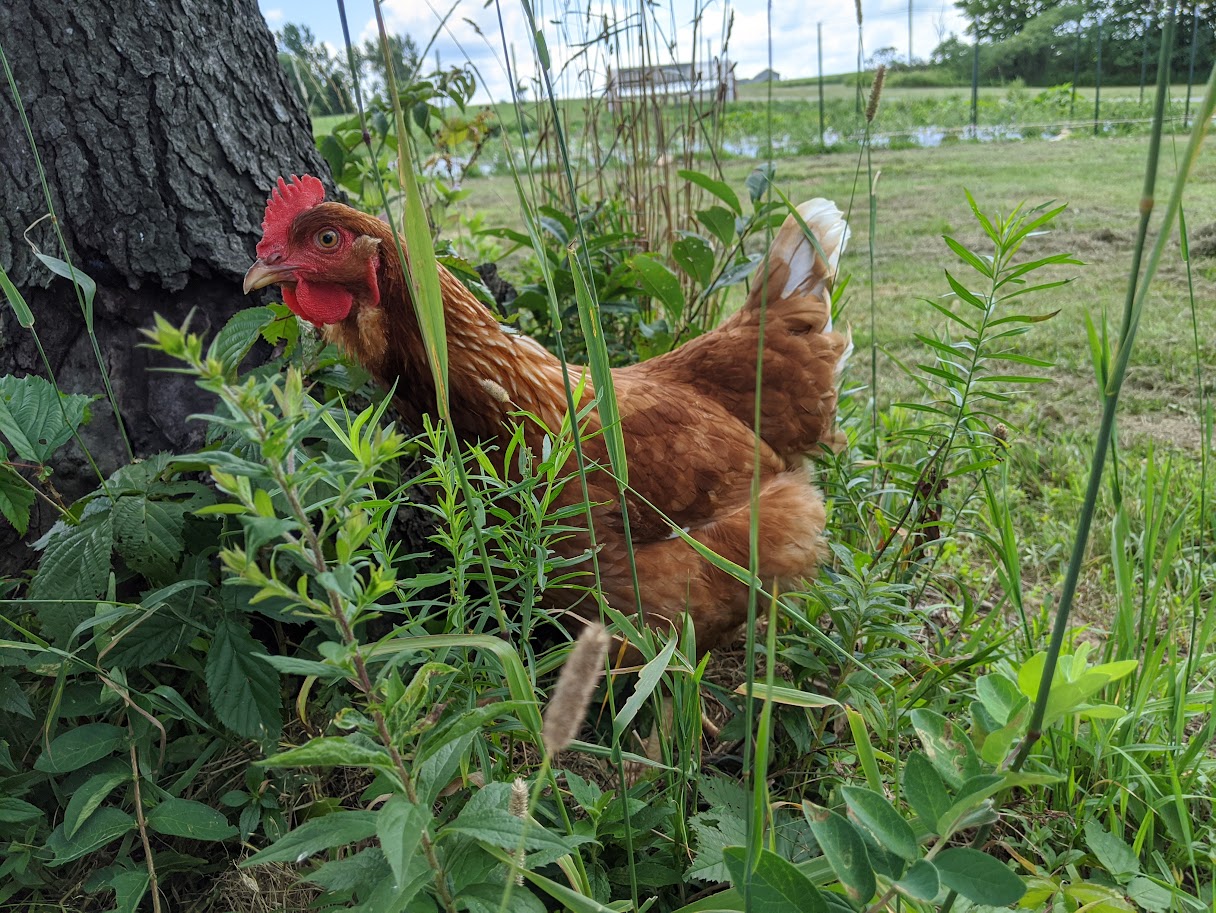
Name: Little Red Hen
Origin of Name: She’s a little red hen
Why she’s Nameworthy: Hops to patio door and jumps at sliding door to come in house and eat chip crumbs on the floor
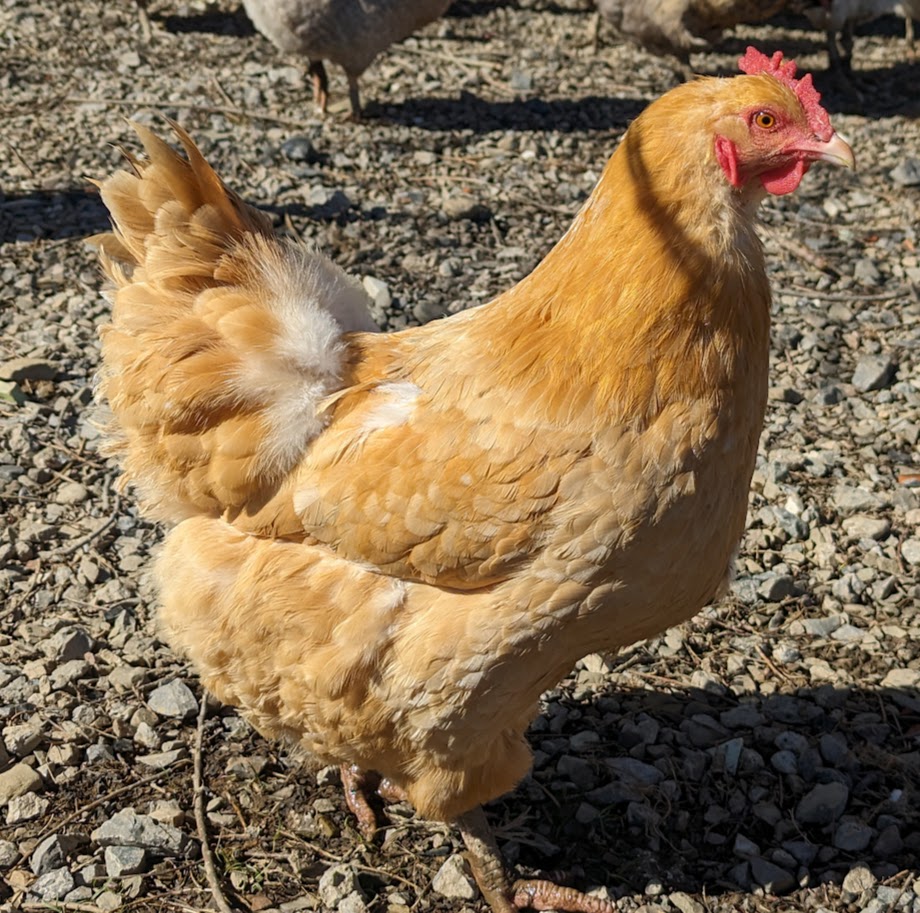
Name: Jayne and/or April
Origin of Name: Michigan same-sex couple that helped legalize gay marriage
Why they’re nameworthy: Jayne and April were two Buff Orpingtons hens that were always grouped up. There was clearly some sort of AI manufacturing error, because both of their motions were completely identical all the time. One day, one of them was eaten. We have no idea which. So the remaining one is Jayne and/or April.
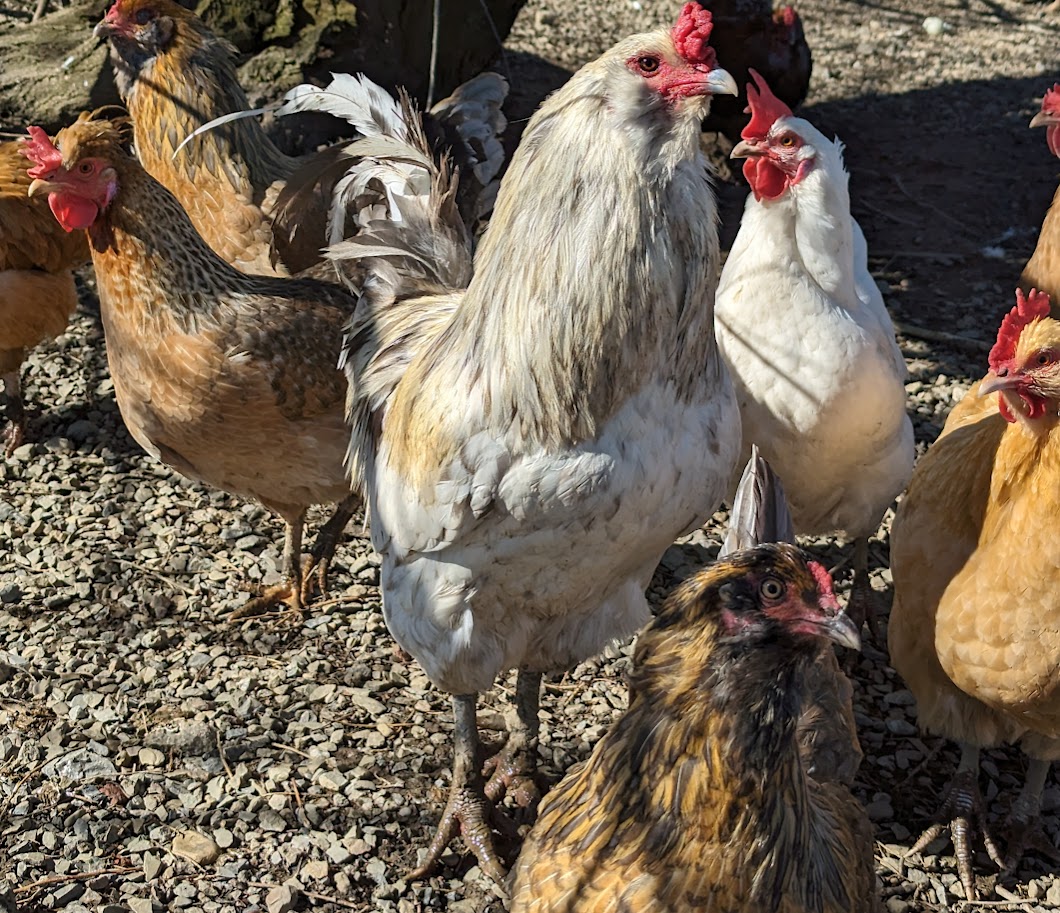
Name: Clyde
Origin of Name: ¯\_(ツ)_/¯
Why they’re nameworthy: You know that award that sometimes gets given out to the first person to do something, even if they didn’t necessarily do it well? Clyde was the first rooster. So he got a name just for existing. Fortunately, he did a good job living up to being a Named Chicken, and is probably the most regal rooster we have on the property.
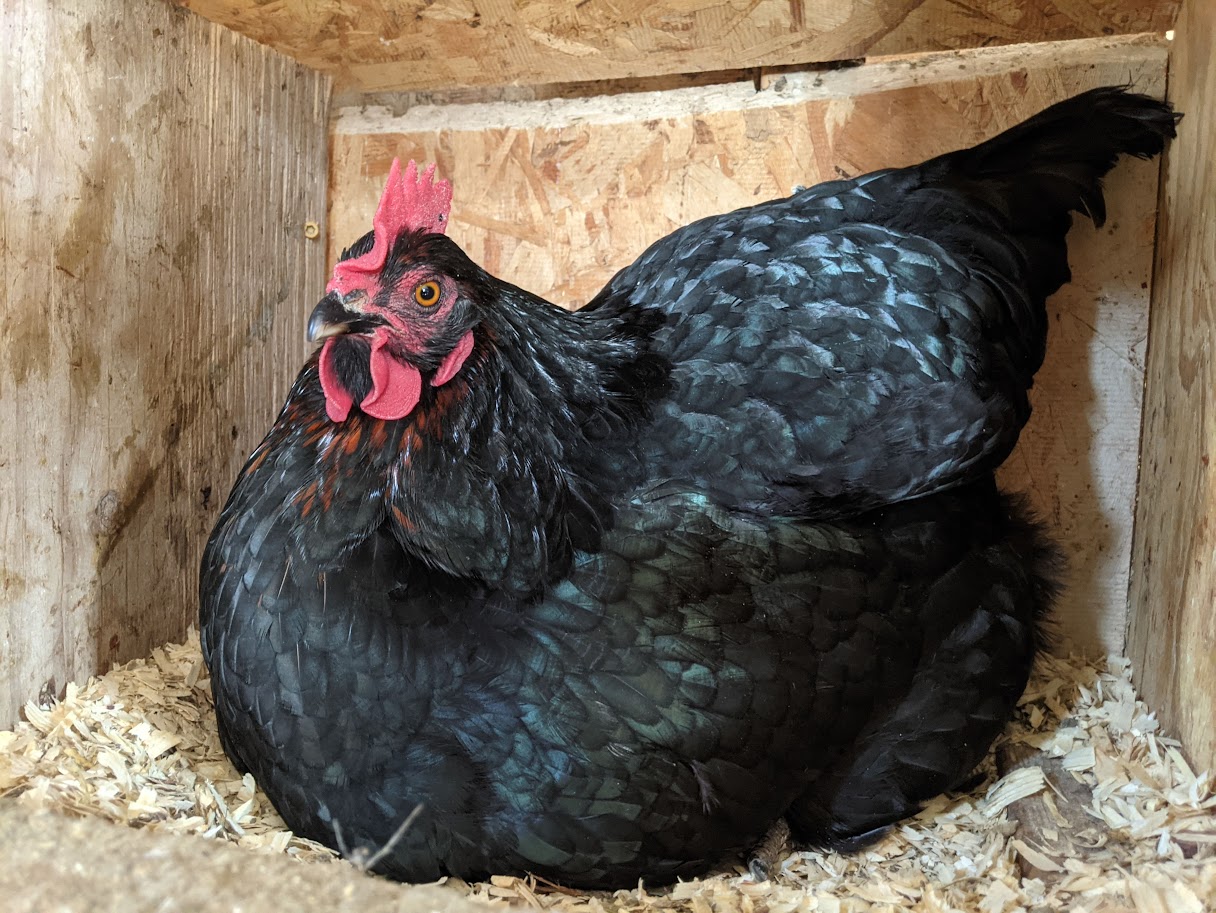
Name: Stormy
Origin of Name: Dark thunderclouds. Sex worker who had an affair with a former president and got shortchanged on the bill.
Why they’re Nameworthy: This is another “early chicken gets name by default” accolade. Dark = Stormy. But unlike Clyde, she’s done very little to be a Nameworthy chicken, with no notable attributes other than being dark. An early blunder on our part.
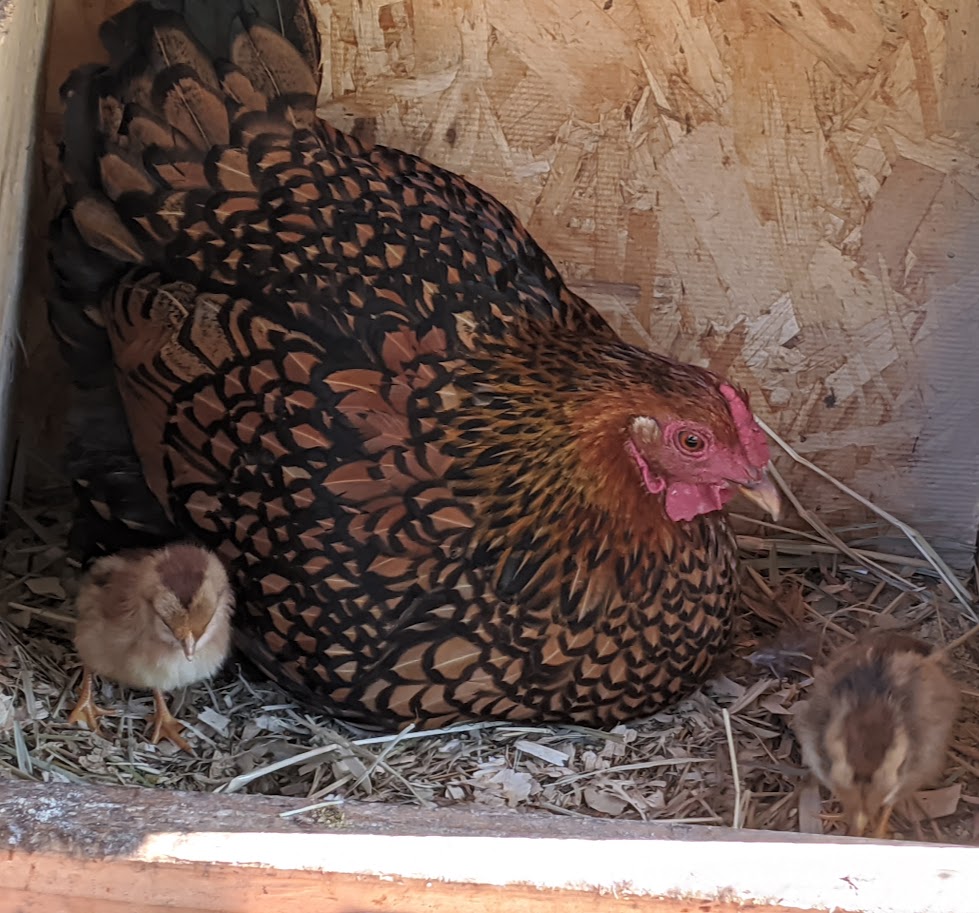
Name: Big Mama
Origin of Name: Absolutely stupid Metal Gear Solid reference
Why they’re Nameworthy: Big Mama is the best mama chicken. When she was broody, she would not give in to the egg collection, and her willpower was strong enough that we just sighed and let her go through with the whole motherhood thing. And she did a damn good job at it. No two chicks were safer than hers, much to the chagrin of neighboring hens that got too close.
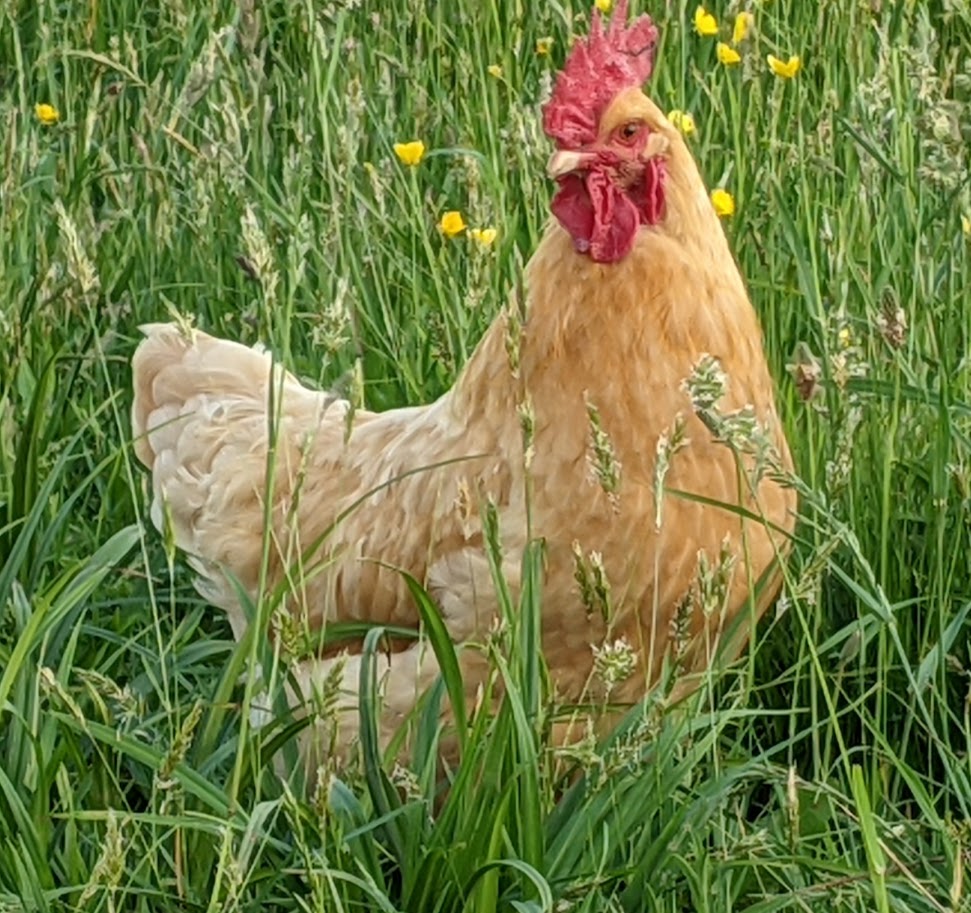
Name: Hermes:
Origin of Name: Hermaphradite
Why they’re Nameworthy: Hermes was a hen… until she wasn’t. Apparently that happens in the chicken world. I think Aphrodite made more sense if we were going with Greek mythology here, but I was overruled by the boss.
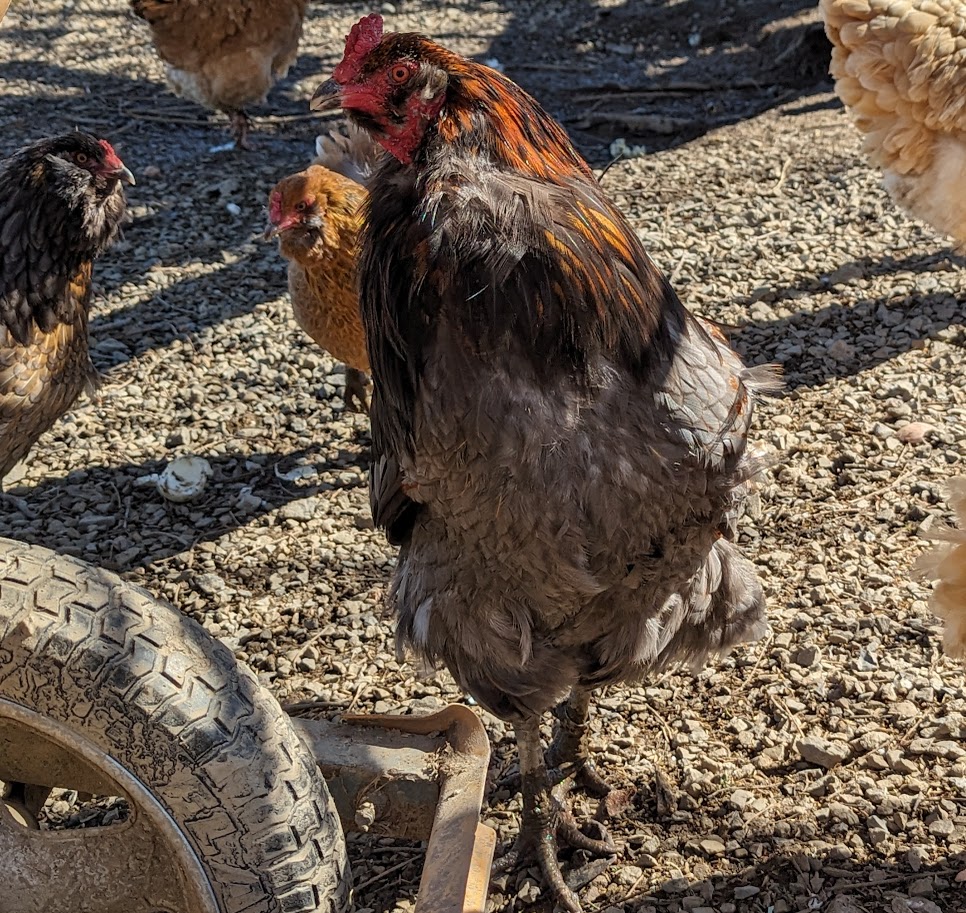
Name: Shy Guy
Origin of Name: Common Mario nemesis
Why they’re Nameworthy: Back in the day, we had an emergency pen in the garage for chickens that couldn’t seem to… well.. survive well with the rest of the flock due to some defect. Shy Guy’s defect was that he was just too shy. He sat in a corner getting beat on by the other roosters, doing nothing to defend himself or make allies. He has since learned how to chicken better and has grown into a finely feathered rooster with plenty of friends.
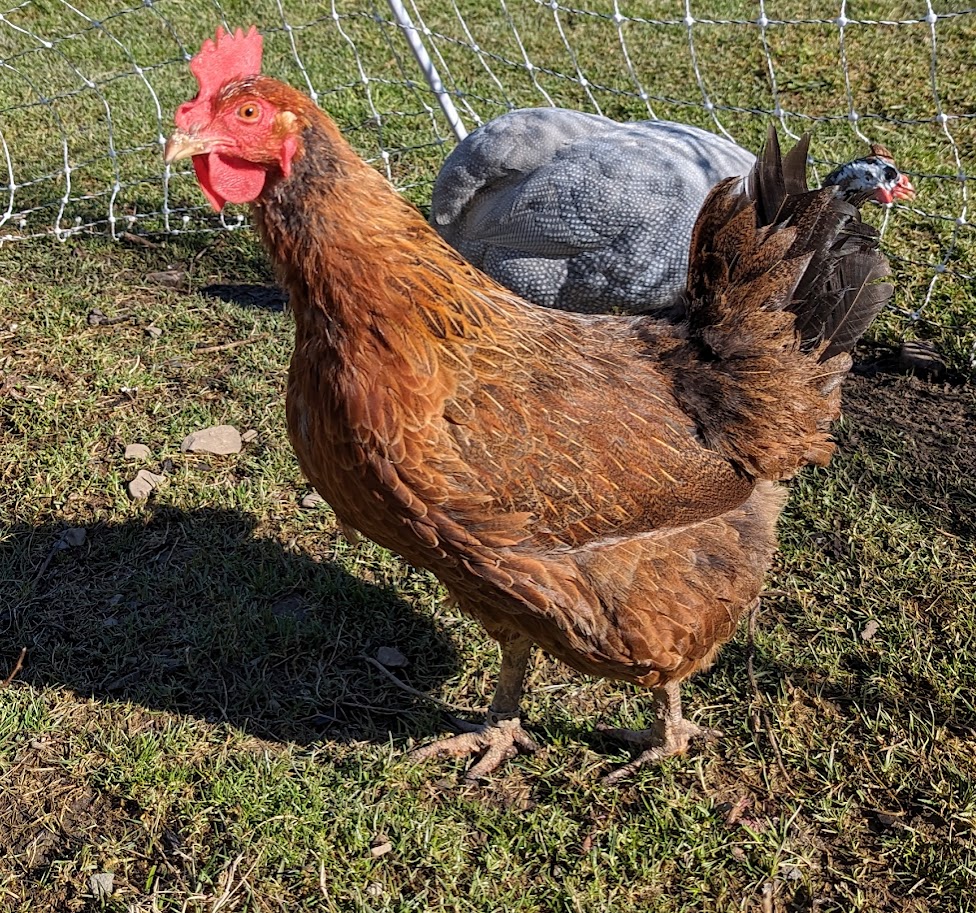
Name: Boss
Origin of Name: That person that gets paid more than you to tell you what to do
Why they’re Nameworthy: Boss goes where she pleases. Often that involves following a human, because following a human often leads to food one way or another. This is especially true if your task involves a shovel. Shovels mean worms, and you can bet Boss will be the first one at the excavation site.
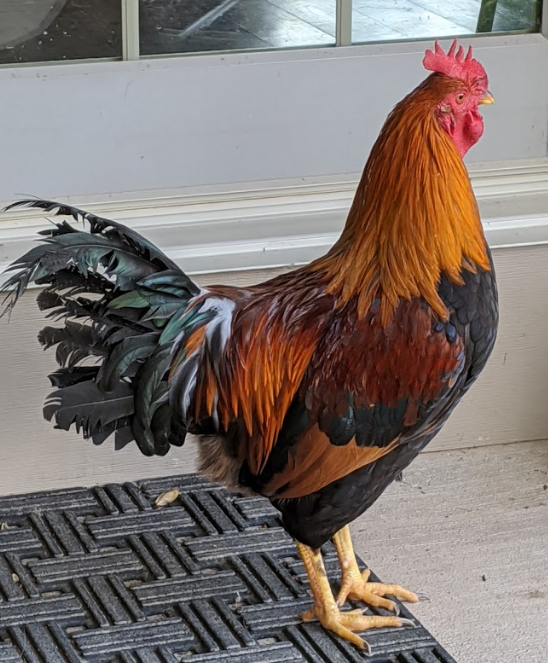
Name: Heihei Chickenchicken
Origin of Name: Chicken from Moana that looks like this thing
Why they’re Nameworthy: Heihei is the Yang to Clyde’s Yin. The two have lived in balance ever since being the first two roosters as Snowy Brook. And like any Yin/Yang relation, they are complete opposites. While Clyde is the stoic, regal chicken with all the ladies, Heihei is a coward. There isn’t a moment where he’s not screaming to let all the chickens know that danger is present. This danger takes many forms, including crows, rocks that tip over in the wind, dandelion growth, cold stares, 3 leaf clovers, sunshine breaking through a cloudy day, other chickens, fungus…
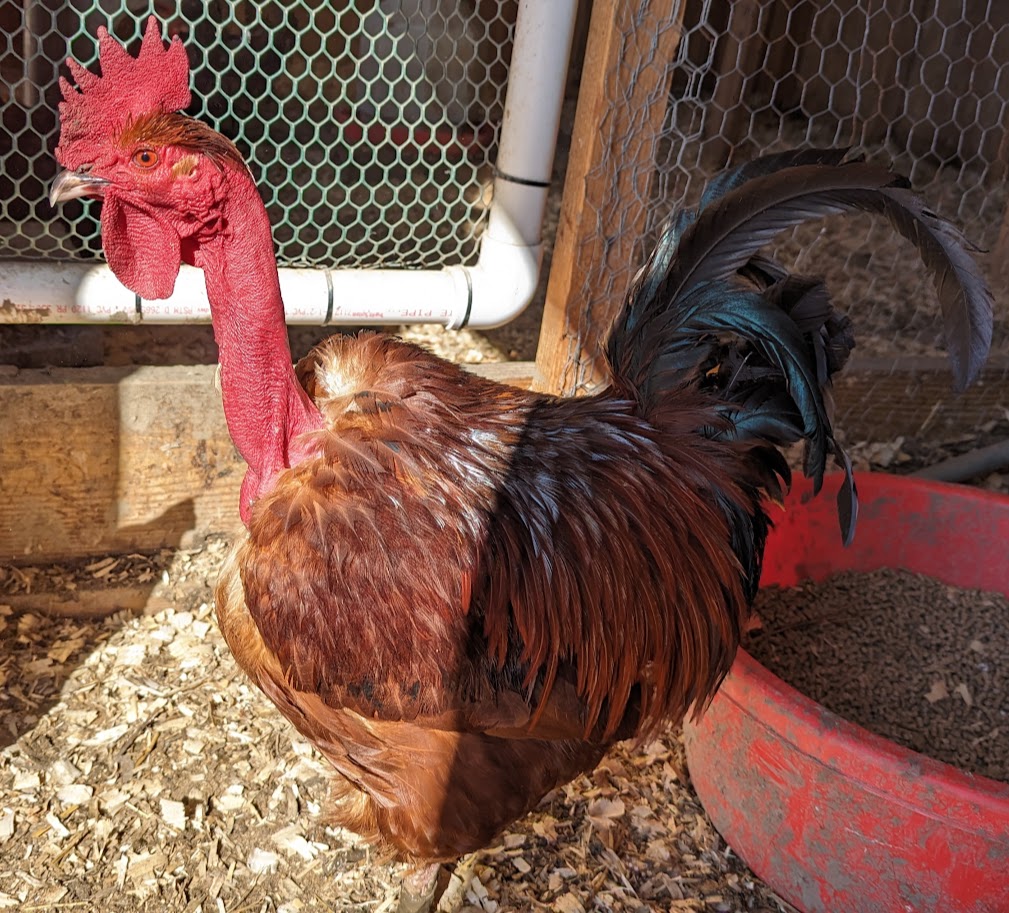
Name: Larry
Origin of Name: Larry David, co-creator of Seinfeld and Curb.
Why they’re Nameworthy: Larry was our first naked-neck chicken. They say not to judge a book by its cover. You can do that here. Larry is as awkward as he looks, and rarely follows the societal norms set forth by chicken society. Despite this, he’s somehow the most prolific chicken on our farm. I hope people want naked-neck chickens.
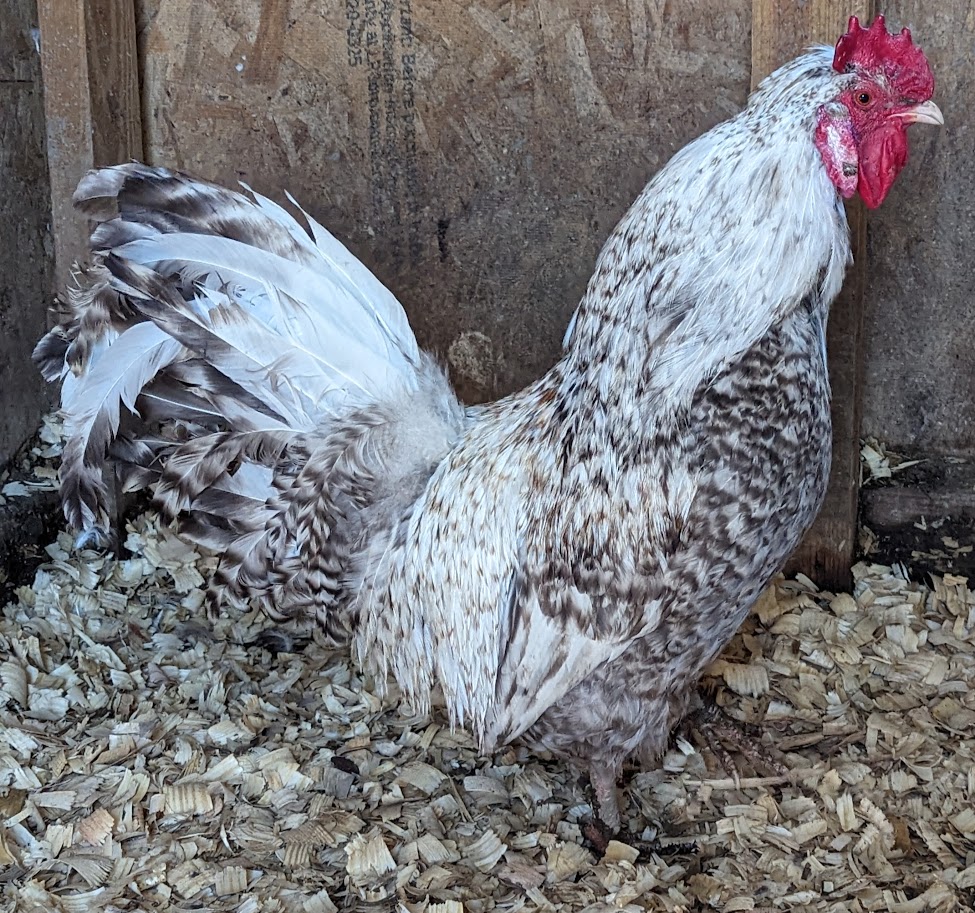
Name: Friendly Rooster
Origin of Name: It’s a friendly rooster
Why they’re Nameworthy: In a world where no other roosters want to put up with Larry’s schenanigans, Friendly Rooster came in to fill the void. He often tagged behind Larry on all his adventures towards social acceptance, providing clucks of encouragement after each of his failed courtship attempts. Eventually, without any sort of prompting, he started coming up to me for corn, making him Friendly Rooster.
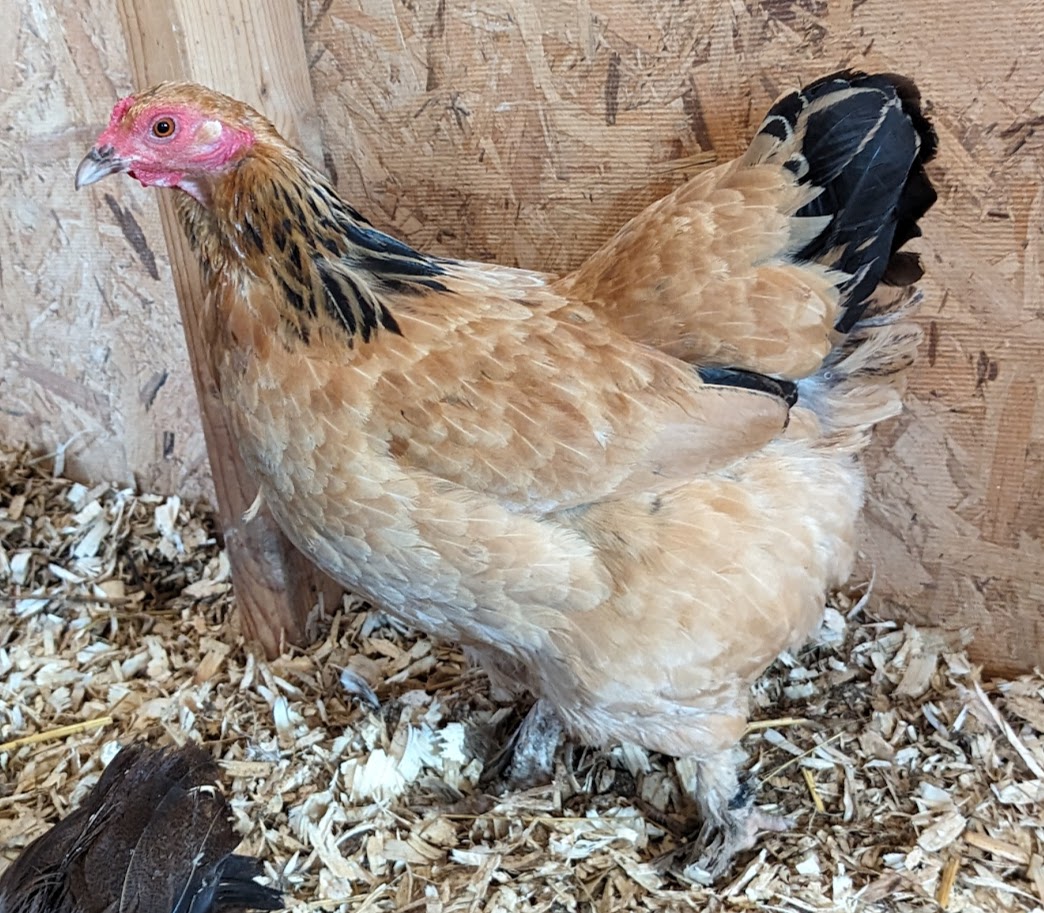
Name: Danny Bhanton
Origin of Name: Danny Phanton, Nickelodeon TV show in the early 2000s.
Why they’re Nameworthy: She’s a Bhantom. Danny Bhantom! I’m not going to turn down an easy pun when it’s gifted to me like that.
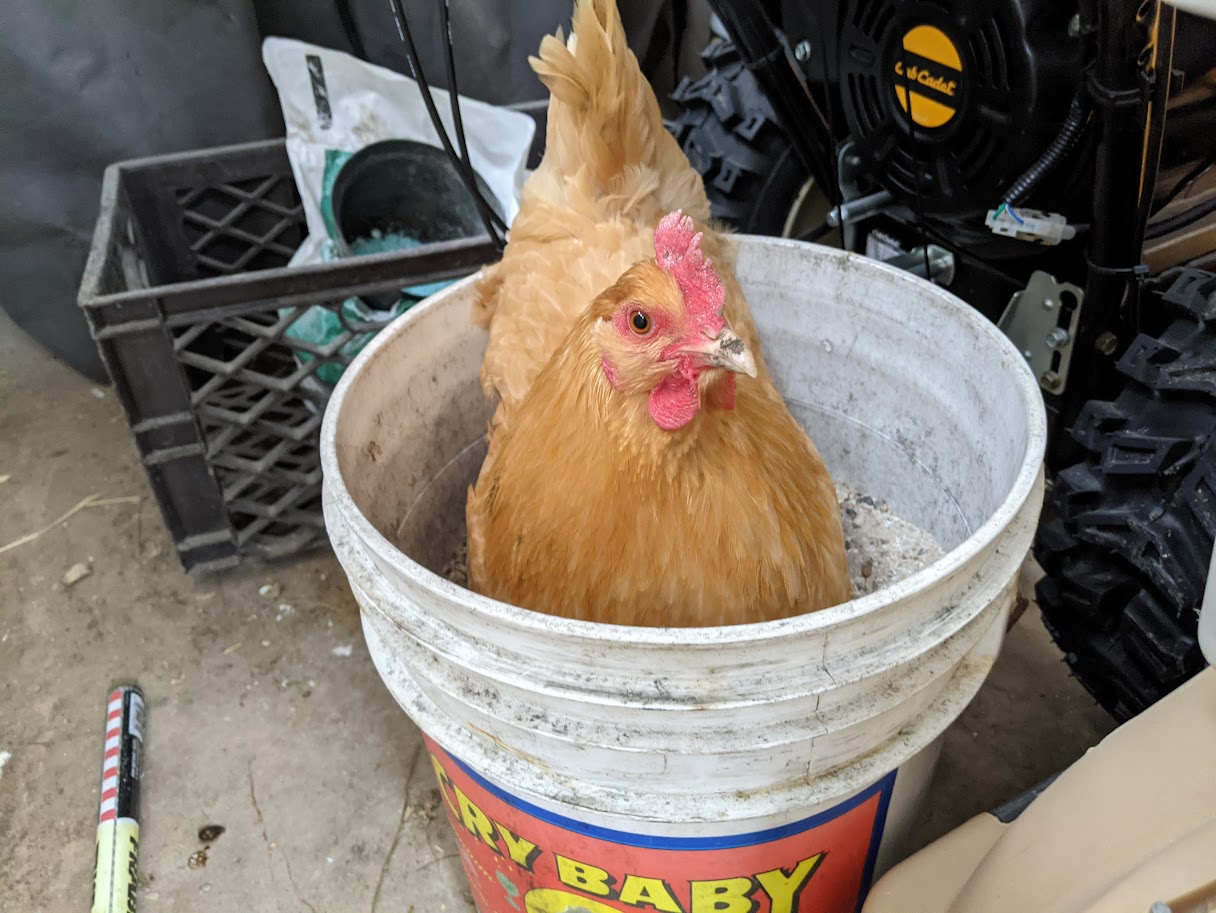
Name: Bucket Buff
Origin of Name: Bucket + Buff Worpington chicken = Bucket Buff
Why they’re Nameworthy: In the early days, chickens used to have access to the garage where a nest box had naturally formed in the corner of the structure. This buff did not like the nest box in the corner. It preferred buckets.
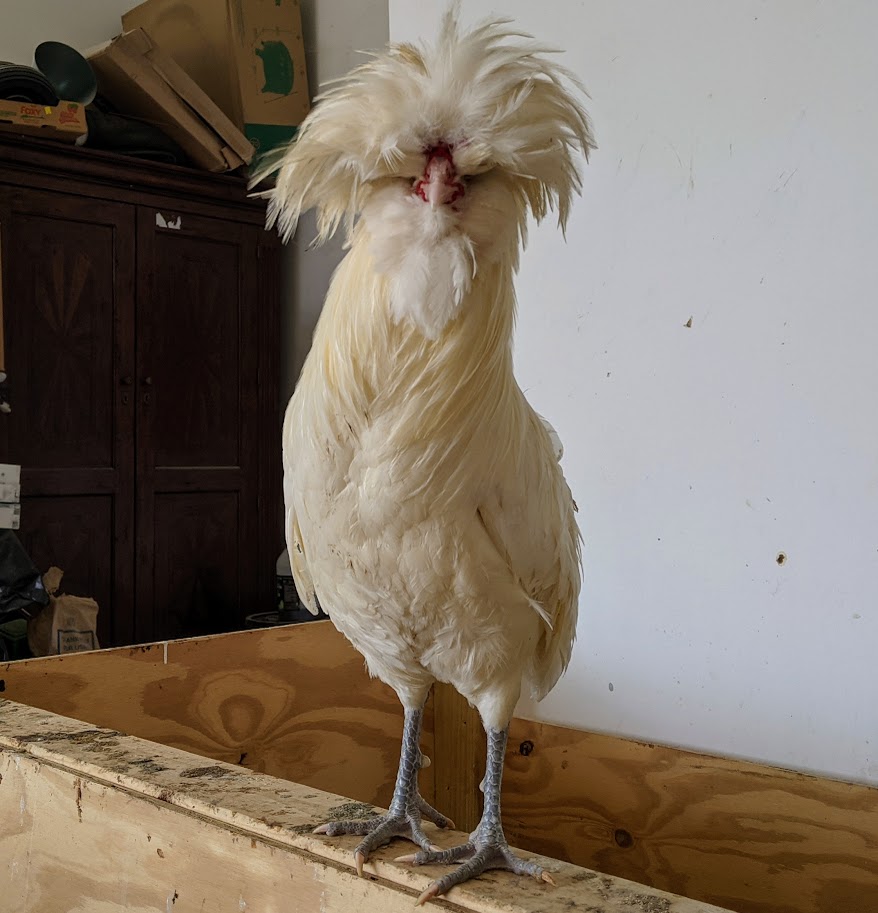
Name: George
Origin of Name: Quote from Amy, “I just made it up”
Why they’re Nameworthy: George is Polish. In the chicken world, that just means he needs a haircut. His long, stupid hair made him a target for other chickens to pick on, and he eventually found himself in the emergency pen with Shy Guy and CeCe. The three of them formed a close bond and together using the power of friendship, became three Named chickens
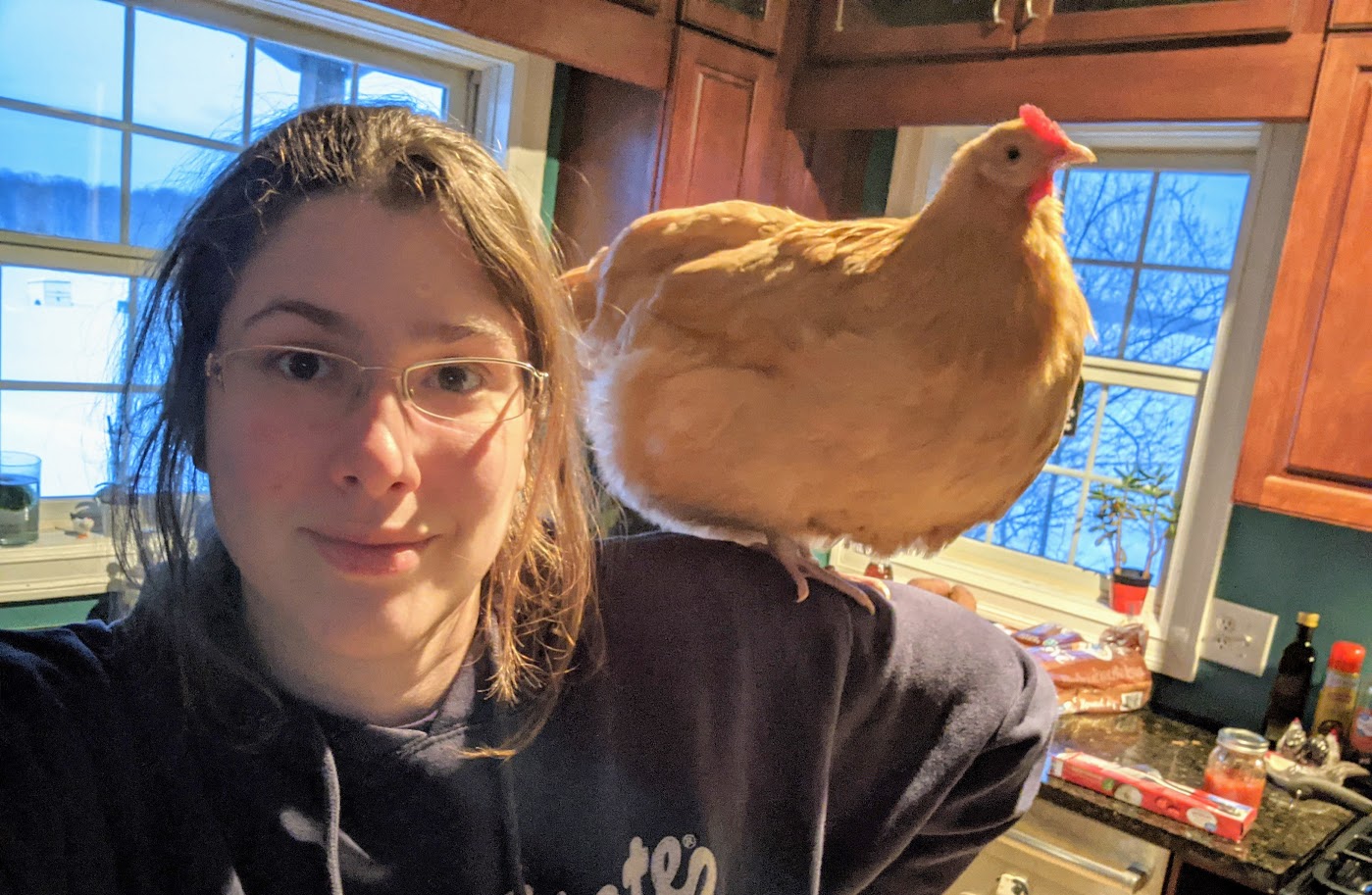
Name: CeCe
Origin of Name: Short for Crazy eyes Crazy eyes
Why they’re Nameworthy: CeCe was the runt of the litter, and lacked development in many areas, including the brain. Now chickens don’t have much to work with there to begin with, so CeCe spent her days in the emergency pen mostly trying to figure out how to function. But because her brain was already so tiny, that meant she had an even tinier head. This led to an interesting phenomenon where her eyeballs were larger than her head and she always looked like she was bugging out. Thus… crazy eyes! She eventually did figure out how to function to some extent, but her eyes were crazy till the end.
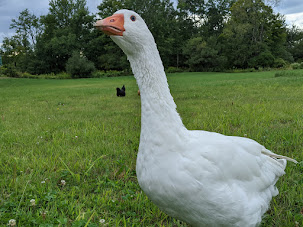
Name: Goose
Origin of Name: Goose
Why they’re Nameworthy: It’s a goose, what’s our other option? Not name the goose?
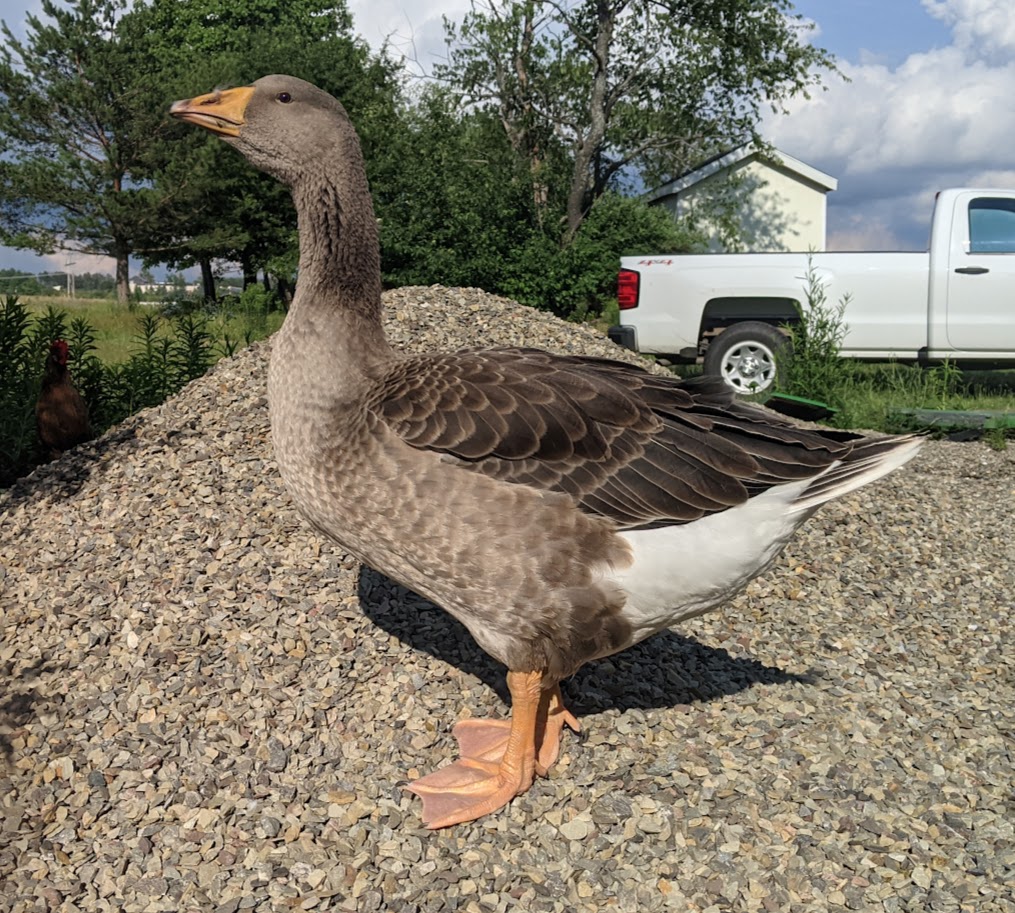
Name: Lady Goose
Origin of Name: Goose with lady parts
Why they’re Nameworthy: It’s Lady Goose.
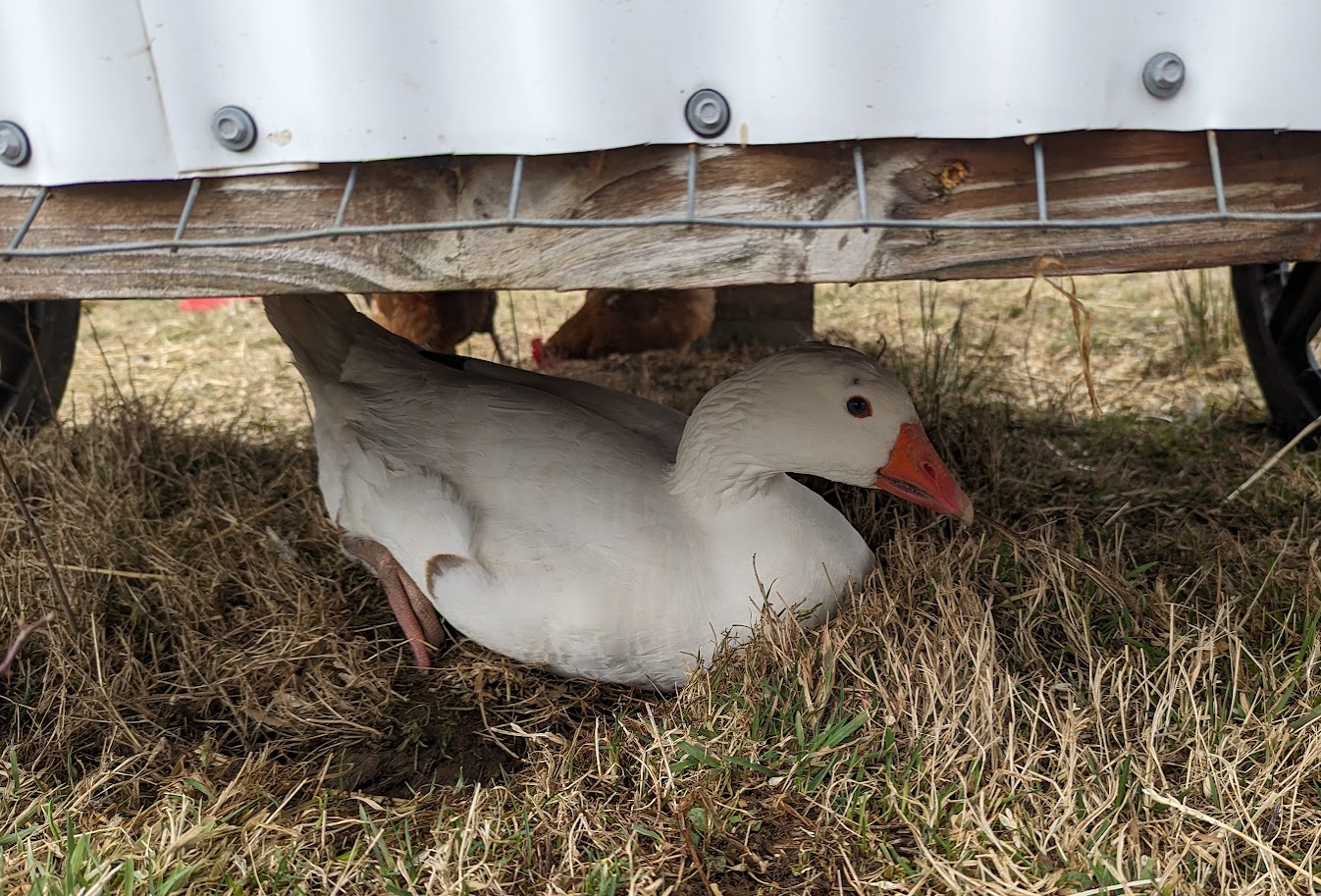
Name: Gregorina the Gimpy Goose
Origin of Name: It was Greg, but then she got broody one day and an emergency naming session was required.
Why they’re Nameworthy: It’s a gimpy goose. Also alliteration.